This week I thought I’d publish a short story from a few years ago. I hope you like it.

The game was over. Marc watched as Lou put the old lead soldiers back in the box, each one slotting neatly into a cushioned slot, neat as a row of—well, soldiers on parade, duh! Even in the box they seemed to stand to attention.
After three hours, it was finally over. The game had been played in earnest. But for Marc, his unwelcome victory brought no ceasefire, no end to hostilities. It was merely the provocation Lou had needed to shout “Best of Three!” and now Marc was doomed to relive the torment at least once more. Possibly twice, if the unthinkable happened and he was stupid enough to lose the next game. A one-all draw was unthinkable.
Lou’s joy was evident in the gleeful chuckling as he took each soldier from the field of battle and carefully put it away into its own little green felt lined slot. His false teeth flopped about inside his slack jaws. Marc’s stomach lurched at the sight. Old people were so creepy.
His heart seemed to have fallen to his boots. Just when there was a chance of him living some kind of normal life, of going out and seeing something of this town on a Saturday night like other teenagers, hoping against hope to actually live, his soul was snatched away to babysit his weird grandpa because his mum had to work and there was no one else to watch the old bloke. Lou’s slippered feet slapped the lino as he did his victory dance. Just his luck if the old git fell and broke a hip and Marc had to spend all night in the hospital.
“You’re such a loser.” Marc said.
Lou just laughed. “Let’s get some dinner, Son. Then it’s Round Two!”
Marc put on his coat and went to the chip shop. His friends were just coming out as he went in.
“You coming down town later?” one of them called.
“No, I’ve got to stay in. Mum’s on a late shift so I’ve got to look after my grandpa.”
They nudged each other and laughed. “What a loser!” One of them said and they all laughed again. Marc sighed and turned for home.
Grandpa was waiting for him, plates out, ketchup, salt and vinegar on the table. “Thanks, Son,” he said. “Not every kid your age would stay in on a Saturday night and keep his old grandpa company. I know it’s not cool, man.’
Marc rolled his eyes. If only grandpa didn’t keep trying to use modern slang, life would be easier.
“It’s all right,” Marc told him. He didn’t mind all that much, he realised. It was cold out. And his friends were all freaks and idiots anyway. He ate his chips. “How old are you, Grandpa?”
“96. Why?”
Marc shrugged. “Just wondered. Why do you like playing soldiers so much?”
“Ah well, you see, my dad, he was there.”
“There?”
“Yes, there. When I was old enough to be aware of him, he seemed like a frail sickly bloke, but it was the war made him like that. When he died, I found all his medals and his photos with his comrades and that. I was surprised to see how young he looked, quite good-looking really, not that I take after him. And he looked—I don’t know, strong, I suppose. Healthy. He was laughing at the camera, just a normal young bloke. And in the wedding photo of him and me mum, well, they both looked so—alive, so happy. It made me wonder. So I spent all my life finding out about the first world war, what happened and why. I started to see him as the hero he really was. He stopped being some useless old bloke.”
Marc thought for a moment. He balled up his chip wrapper. “You were in the war too, weren’t you?”
“Yes, Son. I was in the war. The second world war. The one they said could never happen.”
“Tell me about it,” Marc said. ‘Then maybe we could have another game.’
***
 I recently read somewhere that routine hinders the creative process. To really be creative, I read, we need to let go of organisation, routine and any kind of rigid preconceptions or framework, and allow ourselves freedom to explore in any direction and form that appeals to us.

 If you are organised, you can relax and focus on the job in hand. You make the most of your time, you crack on, (hopefully/usually) and have something concrete to show for it, so productivity is improved and you feel good about what you’ve achieved. Which makes it more likely you’ll do it again tomorrow. In addition, good output leads to increased experience, increased confidence and also positivity, and as many writers know, these are commodities that can be hard to come by.
 As I’ve said already, routine, planned writing leads to increased output and measurable results. You see the word count piling up and you see that you are moving towards your deadline or goal. This gives you the impetus you need to write through the tough sections of your book, those tricky little scenes and the mid-book blues, even through the ‘I don’t want to do this anymore’ sulks.
 This week, I’m away so I thought I’d do a quick and easy (for me haha!) post: It’s a deleted scene from A Meeting With Murder: Miss Gascoigne Mysteries Book 1 which is one year old!!!!!!!
 I remember as a kid I was a voracious reader. By the time I was 6 or 7 I was reading from a big book of fairy tales.

 Guess what? I’ve been doing stuff on social media!


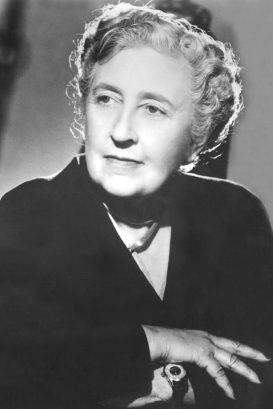 Agatha Christie is arguably one of the most well-loved authors of all time. And her books are still being published in new formats, turned into plays and TV series and mini-series, and of course films on the big screen, a hundred years after she first began her writing career. Her books regularly top the online bestseller lists and there have been spin-offs, recreations and fan fiction. You can even buy her ‘secret notebooks’, biographies and merchandise.
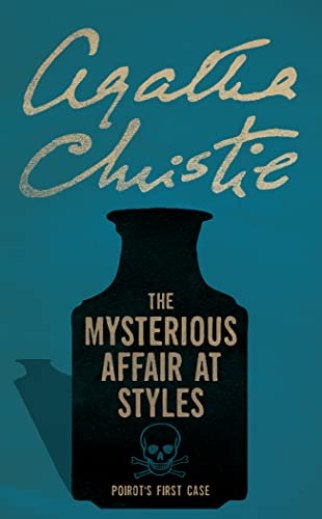 Well obviously you’ve got to read the first Poirot book, not that sequence is an issue with Christie as it is with many authors. But it’s always interesting to a) read an author’s first book, and b) read the first book to feature a well-known detective. So you absolutely must begin with
  So Poirot is not in any shape or form the figure of a hero – he’s short, stout, he limps, he’s fussy and overly particular, and he’s older in years than a classic swash-buckling, overcoming-all-obstacles big-screen hero of that era or even our own. And he has personality flaws in the form of vanity and self-importance, and often, a deep lack of self-belief that I think most of us could identify with today.
 Okay, I know I said five books, and there they are (not really five but it’s not easy to choose between some of them…). And I can’t resist adding a bonus one: the extraordinary
 I’ve been really stumped for ideas to come up with for a blog post or a newsletter lately. Mainly because I’m using all my creative energy and inspiration for the final edit/polish I’m currently doing on A Wreath of Lilies (out 8th December, lest we forget – all too soon for my comfort right now).
 Because more than half of my books are set in the 1930s, I constantly find myself – even eight books in – looking stuff up. It might be easy to find stuff like ‘good poisons to kill someone with’ (My search history would def land me in a lot of trouble if anything ever happened to my nearest and dearest), but sometimes it’s deeper, more complicated stuff (ie questions such as ‘when did the UK first get direct dialling telephone systems?’ or ‘how much did a postcard and a stamp cost in 1934?’) I need answers to.


 As you know, I write genre fiction – that is to say it fits neatlyish into a specific genre type of book – I write mysteries. My books are not, by any stretch of the imagination, literary, nor are they ‘general’ what ever that is. Some writers are quite apologetic and embarrassed that they don’t write something high-brow. Not me. I believe that genre fiction has huge benefits and there’s no need to feel that I ‘only’ write mysteries: ‘Oh it’s only a mystery’ or ‘I really only like romances, I’m afraid.’


You must be logged in to post a comment.