Coming Summer 2024: Midnight, the Stars, and You: Dottie Manderson mysteries book 8 #newbook #mysteries #HistFic

I thought I’d already shared this, but I can’t find it anywhere, so here it is, a sneak peek of the opening scene of chapter one, possibly for the second time. (and sorry, too, it’s a bit long…)

Book 8 of the Dottie Manderson mysteries finds Dottie fed up with waiting and all the fuss, and just wanting to get on with being Mrs Detective Inspector William Hardy. She and her mother and her sister all want different things, and Dottie thinks, ‘It’s my wedding, it should be how I want it!’ An unexpected invitation could be just what she needs. How wonderful it will be to get away to a weekend house party and forget all the worries of organising a wedding!

Of course William, like all husbands-to-be everywhere has no interest whatsoever in the problems of the right kind of lace or the perfect place setting. In any case, he’s got a special kind of investigation going on, one that means bringing a good friend to justice, stretching his loyalty to his profession almost to breaking point.

Dottie Manderson was already fed up to the back teeth with parties. Admittedly, she thought, one expected parties in June. And just lately life had been nothing but. Tennis parties, tea parties, afternoon dancing parties, mid-morning tea parties, dinner parties, drinks parties in the evening, it was endless. And now, socialising in London was giving her a sense rather too much like continually stepping over graves—those of dead friends as well as dead relationships. Wherever she went, dragged along by her mother or her sister, or her mother and her sister, to various events in so many houses and gardens, she was continually running into people she either knew, or had heard of through other acquaintances.

This evening was a case in point. They were at the Sir Nigel Barrowby’s lavish Tyne Square townhouse for dinner and dancing. Dottie hid behind the same half-glass of white wine she had been clutching for almost two hours and looked about the room.

Over there by the fireplace, hanging on the arm of a man with a military moustache, was Anabella Penterman nee Wiseman of the New York Wisemans, married to Dottie’s almost-beau Cyril Penterman less than a year and a half ago, and yet now if the gossip columns were correct, the couple were very publicly living separate lives, and divorce seemed to be on the cards. The woman had glanced at Dottie four times now, though only managing a polite smile the first time, every other occurrence accompanied by a bright hard stare. Dottie noted that the woman had lost a lot of weight, and her left hand held no rings.

Then, on the opposite side of the vast drawing-room was the Honourable Peter St Clair St John giggling rather childishly, in Dottie’s opinion, with a couple of really quite young girls.

‘Far too young for him,’ Dottie murmured out loud.

‘Oh definitely, dear,’ replied a woman standing a few feet away. She drew a little closer, saying in a low tone, ‘I don’t know what their parents are thinking, introducing them to that wolf.’

Is he a wolf?’ Dottie turned to face her companion, a blonde woman in her early thirties, immaculately turned out. Dottie felt a slight flash of recognition but couldn’t quite reach at the woman’s name. ‘I always found him a bit dull, if I’m honest. And only ever interested in himself.’
Belatedly she wondered again who she was speaking to. It wouldn’t do to say that to a close relation.

‘Well, absolutely. His only interest in his life has always been himself. A thoroughly tiresome younger brother, I don’t mind telling you. But once he gets a girl to himself, he’s all hands, from what I hear.’

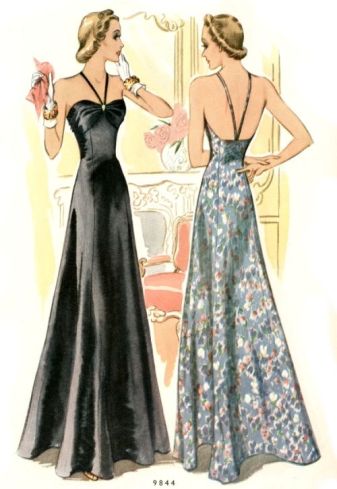
Too late Dottie recognised Christiana St John Milner, the widow of the Milner empire since her husband, the Honourable Sebastian Wilcott Milner had passed away under what Dottie had always regarded as odd circumstances during an avalanche when out skiing with friends in the Swiss Alps just–what–surely it was barely six months ago, Dottie thought, yet here was the young widow in a daring dress of figure-hugging gold lame, not a single sign of mourning about her.

Catching Dottie’s glance at her dress, Christiana smiled and held out her hand. ‘I don’t think we’ve ever been formally introduced, though I’ve seen you at a number of events over the last two or three years. Christiana, please.’

Dottie shook her hand. ‘Dottie Manderson. Just Dottie.’

‘Not Manderson for much longer, I hear,’ Christiana said.

‘No, that’s true. Not for long now. The wedding is in August.’

‘Lovely. And am I right in thinking that he’s not one of our lot?’

Dottie tried not to be offended. She’d heard this a lot in recent weeks, and should really have become used to it. But still, it grated.

‘He works as a police officer, I expect you mean,’ she said, carefully keeping her tone neutral.

Christiana looked mortified. Her hand came out to just touch Dottie’s arm. ‘Oh, I’m so sorry. Please don’t think I meant…’ she sighed. ‘I’m sorry. I didn’t mean it quite the way it may have sounded. Oh this is a terrible start to a friendship. I’m not a snob.’ Looking into her glass, she said softly, ‘Believe me I know all too well how hard it is to find a good man. And when one is lucky enough to find him, one thanks one’s lucky stars and refuses to let go.’

‘I’m sorry too,’ Dottie said. ‘I’m afraid there have been a number of critical comments, and I’m feeling rather on the defensive. William’s family had an estate but unfortunately it was sold a few years ago to cover—er—’

‘Death duties?’ Christiana suggested helpfully.

Dottie gave slight shake of the head and a wry smile. ‘That. And debts.’

‘Ah! Well, there are plenty of those amongst the so-called upper-crust And even the aristocracy, as we both know. I can look around this room and tell you who is solvent and who hasn’t got the proverbial penny to bless himself with. Let’s start with my idiot brother. Broke,’ she smirked at Dottie, ‘Definitely not got a penny to his name. I’m so glad you didn’t fall for him.’ She discreetly pointed out two other men and a woman and said, ‘Broke,’ for each of them.

Dottie was astonished. Christiana was right. These four people were four people who Dottie would have practically gone to her grave believing to be financially stable, solvent. Inadvertently she took a gulp of her horrid wine. She grimaced ad swallowed quickly.

‘But my father is thinking of going into business with Lord Dalbury and his friend Milo Parkes. They’ve been having talks all week at Father’s club.’

Christiana looked concerned. ‘Oh my word, no! Please warn your father to get out whilst he can, they will bleed him dry!’

Dottie nodded. ‘I’ll tell him. Thank you for the tip. It’s astonishing isn’t it. As you say, one takes everyone at face value, and we make assumptions based on what we see.’

‘Which prompts me to ask, Dottie, what do you think of my dress?’

‘Oh it’s lovely!’ Dottie didn’t even have to stop and think about that.

‘It’s actually an old one of my mother’s. Yes, really, it’s more than twenty years old. She had some beautiful gowns and coats and things. Furs. Some of them were terribly expensive, and my brother wants to get rid of them. Sell them. He needs the money.’

Dottie said nothing, wondering—or rather suspecting she might know where this was leading.

‘I’m having a house party next weekend. I know it’s horribly short notice, but I was wondering if you’d do me a huge favour. I was hoping you might know a few people who would be interested in buying Mother’s things. I don’t want them going to just anybody, but if they were people you could recommend, I might not mind too much. I don’t want it to feel like village jumble sale with everyone pawing over my mother’s things. But if I can help Peter, I feel I have to do so, he’s so wretchedly clueless. Could you spare me a weekend to come and visit, and bring your lovely fiancé, of course, and if you could just go through Mother’s things and tell me what might fetch some cash, and who might be interested… there aren’t many ‘names’, Mother went rather her own way in fashion, although there are some Carmichael and Jennings items you might be interested to see. Well, perhaps you’ll think about it and let me know. You can telephone me, I’m on Belgravia 139.’ She grabbed Dottie’s arm and said in an urgent tone, ‘Do say you’ll think about it, please. This means so much to me.’

‘I will,’ Dottie promised, and had only time to repeat these words as the music suddenly began, and a young man came to ask Christiana to dance.

***

Extras… the minor characters every mystery story needs

Extras complaining to the author about not having a name – again.

Last week was all about the main characters – the detective, the villain, the side-kick and of course the victim(s).

This week, I’m interested in thinking about the minor characters – or extras – in my head I see these as a kind of walk-on part, much like those in any TV show or movie. They don’t always have lines. Sometimes they don’t even have names. They might be described as ‘an elderly dog-walker’ or ‘the woman behind the shop counter’. They crop up everywhere the story goes – in shops, houses, on village greens, in museums, and at dinner parties.

But why are they there?

Extras fulfill a number of criteria and needs for the author and the reader.

  • they can deflect attention away from the culprit or villain.
  • they can provide the reader with useful clues or snippets of information.
  • equally, they can provide us with (less useful, sometimes) red herrings and wrong-turns.
  • they enrich the story so it doesn’t consist of just your four main characters, unless that’s the whole point of the story.
  • they can give us a sneak-peek of something that might happen in a later book if this is a series.
  • they act as a kind of commentator or dramatic chorus to comment on the action or criticise or laud the ‘hero’.

But life as an Extra can be tough and is often unpredictable.

Police or other people in authority (completely unaware all too often that they themselves are Extras, can bully them or wrongfully arrest an Extra and accuse them of terrible things they haven’t done.

You need a huge range of skills as you may be called upon to perform almost any task from forensic assistant to chambermaid.

As an Extra, you might be completely overlooked by the reader who doesn’t even notice you, let alone what a magnificent job you do pretending to be an elderly dog-walker when you’re really a young woman in her twenties on her way to college and you don’t even like dogs.

Alice was at the party with two friends. Who were they? No one knows.

And they never remember your name, which is why you have to have a description attached: Miss Jones, the games mistress at school where victim used to teach. You might even find yourself very near the bottom of a long list of characters, a list designed to help readers remember all the people in the book they’ve met but don’t remember.

No one asks your opinion. ‘Tell us, Poirot,’ they cry, at the end of the book. ‘Who did this dastardly deed? and why?’ I mean, all the Extras probably know this information too, don’t they. But no one ever asks them. They just come in with the tea tray and leave without anyone noticing.

Likewise, no one ever asks an Extra if they’re okay and how they feel about being shut up in a big country house with loads of stairs, and a murderer roaming about bumping people off willy-nilly.

And as if all this is not enough, when the author gets bored, you might even end up as the next victim, just to ‘spice things up a bit’.

How is that fair? It’s not just a policeman’s life that’s terrible hard. Try being an Extra for one book, let alone a whole series. I’m only surprised they don’t have a union.

‘I hate being in crowd scenes,’ said the person in the red outfit. ‘So do I!’ said another person in yellow. ‘It’s so anonymous.’

***

The Big Four: the four main characters in a murder mystery

I love murder mysteries. I doubt this comes as any kind of a surprise to most people reading this blog. Characters in a murder mystery fall into one of two categories: they are either part of the Big Four, or they are Extras. This week I want to quickly chat about the Big Four.

Who are the Big Four?

The Big Four are the main characters without whom we would have no murder mystery. They are: The Victim(s), The Villain(s), The Side-kick(s) and The Detective(s).

And yes, they often come as a pair or even more, not just as a lone individual. Detectives, for example, often come as a pair – one an amateur and one a professional. Villains too, can sometimes deliberately confuse the reader by sharing the limelight with another villain, and share the crimes too.

And who doesn’t love a high body-count? Why stop at one Dastardly Deed when you can have two, or three, or…

Let me introduce you…

The Victim(s)

Victims, as avid mystery lovers know, are always bumped off for a reason. And obviously it is The Detective(s)’s(s’)(??) job to discover why and bring the perpetrator to justice.

The richer, the more arrogant, cruel, cold, grasping, greedy and crafty our victim is/was, the better we like it, don’t we? We can then take a vicarious pleasure in their demise as we would never, ever do such a thing ourselves in real life. And the worse they are, the nastier and more creative their all-too-timely death should be. BUT.

They can’t be so bad that we don’t care if their killer evades detection.

In my view, ideally there should be two or three of these demises per mystery because, if I’m honest, I’m always a bit disappointed if there’s ‘only’ one.

The Victim is there for one reason only–to make us, the reader feel clever:  to provide something for The Detective to detect, of course.

The Villain

Whenever I hear the word ‘villain’ I always think of a man in a swirling black cape and top hat, twirling his moustaches menacingly (or smugly, either will do)and saying ‘Mwah haha’.

Sadly, the days of Dick Dastardly have gone, (drat, drat and double drat) and nowadays The Villain can look like anyone:

A little old lady.

A priest.

A stalwart Major-type.

A handsome young man on his honeymoon. (I’m looking at you, Death on the Nile.)

A nurse. (Sad Cypress)

Even a child. (Crooked House)

The Villain is often charming, often invokes our sympathy due to baggage and issues, and can even make us think, ‘Aww well, she/he’s had a tough childhood, maybe we should kindly overlook those four grisly murders and let her/him have a new chance at life.’

We must be on our guard at all times throughout the book until the moment this villain is unmasked.

The Side-kick

The Sidekick has a demanding role. They are there as a kind of placeholder/proxy for the reader.

They must be clingy to the point of irritating, sticking by The Detective’s side when they really should go away and leave him/her alone to think things through. But no, they stick around at all times, asking stupid, inane and tedious questions, so that we don’t have to. We sit at home in our comfiest armchair and loudly exclaim, ‘Rookie mistake, I already knew that…’ but really we’re thinking, ‘Ooh I wasn’t sure, but now that you mention it…’

The side-kick – desperately needed to help us survive the journey

So they are there to help The Detective and the reader to find the evidence and the clues and to arrive at the truth of the mystery.

In fact they don’t create a dialogue, but they are the dialogue – through The Side-kick, the reader can talk to The Detective and The Detective can talk to us.

And finally:

The Detective*

The Detective can be anyone.

Rather like The Villain, The Detective can be a law-and-order professional, or someone from an associated profession (forensics, psychology…), or an amateur with a gift, a nurse, a priest (The Complete Father Brown stories) a stalwart major-type, a nurse, a handsome young man on his honeymoon or even a child (The Sweetness At The Bottom Of The Pie).

The Detective has one job and one job only: to find out whodunit and bring them to justice.

It’s essential that her or his main characteristics include:

Passionate desire for justice, even at risk to self, it goes without saying, I hope.

Incredibly close attention to detail: ‘Sacre bleu, this dust is 3.14159 milimetres in ze thickness, therefore the killer was the maid and the crime was committed on Tuesday afternoon.’* The whole case may depend on just this kind of minuteness.

‘Mesdames et messieurs, allow me to reveal at last, the identity of the criminal’.

Very keen observation skills: ‘Zut alors, the footprints in the mud are of a depth of 3.14159 milimetres, therefore we must find a person of 6 feet 1 inch who weighs 189lbs.’

From the two above attributes, we can also see that they must be good at mathematics too. 

Lastly, the Detective must have a huge ego: We readers love to have all the suspects in a room at the end of the story, and to be taken step by step through the crime to learn the identity of The Villain, and to have the satisfaction of them being led away in handcuffs. Therefore it is essential that our Detective loves to show off just a little and to deliver a lecture on how clever he/she is and how many different things we missed.

So next time you are reading a mystery, keep a handy notebook and pen by your side, so you can check for all these points!

*must supply own white hat

*sorry btw, for me all fictional detectives are Hercule Poirot, even when they’re not

***

Come back with me: It’s 1935 #timetravel #daydreaming

Coming soon to a posh drawing room near you…

Let’s play a game of ‘what shall we do this weekend’.

I’ve been thinking about how amazing it would to travel back in time to the actual 1930s* instead of just daydreaming/writing or pretending/obsessing about it…

This is what I’ve come up with:

Things I’d be excited to do/try:

A posh weekend at a country house with lots of people who are glamorous and speak nicely.

Ditto the big frocks and hair-dos.

And gloves and hats.

And the four/five/six course dinners.

Bridge evenings.

Going to the house of someone posh for ‘drinks’.

Dancing to the radio in a kind of impromptu disco at home with dinner guests.

The excitement of talkies – films with speaking actors!

Meet Gary Cooper when he was young and gorgeous…

And knowing there is a study or library, and perhaps even secret passages.

And bell-pulls to summon people from the depths of the house. I’d be like a child, ringing the bell then have to run away as there would be no legitimate reason to ring for them…

Maybe a maze? Or a rose garden? Or both? What about a croquet lawn? I am certain I’d be an amazing talent when it came to croquet. I can always bowl a great croque.

It might be nice to – very occasionally – have all the men stand up out of politeness when I come into the room. Or stop using bad words because I am in the vicinity and am a ‘lady’ (until they get to know me better, of course).

Travelling by steam train in the actual era they were used, not just on a preserved line in my usual jeans/t-shirt combo.

Things I’d miss terribly:

Being able to say all those bad words that are so good for stress relief when things go wrong. In the 1930s, I’d probably be vilified for my potty-mouth. Though to be fair, most of my rage is triggered by modern technology so it wouldn’t be an issue in the 1930s, when a telegram was still pretty exciting, and indoor plumbing was all too often a thing reserved for the gentry.

Sorry if I’ve destroyed your illusions about the way a writer speaks/acts/looks, btw.

My freezer, and my microwave.

Going to a cafe ALL the time to sit and watch the world go by whilst pretending to write.

The Internet (sorry to all you nay-sayers).

Nipping to a supermarket – even on a SUNDAY to get the bits and pieces I completely forgot I urgently needed.

Books by all my favourite post-1930s authors such as Ann Cleeves, Helena Dixon, Julie Wassmer, Helen Forbes, Emma Baird…

TV: Midsomer Murders/Death in Paradise/Vera/Madame Blanc/Strike/Van der Valk/Darby and Joan/Three Pines/The Chelsea Detective/Dalgliesh/Whitstable Pearl… (can you spot a trend here?) 

All my modern vaccinations – I don’t want to catch diptheria/small pox/scarlet fever etc

Being able to slob about in jeggings and a baggy jumper – because I reckon there could be times when looking posh 1930s-style might just be too much effort…

Being allowed an opinion about anything other than babies, flower arranging or hair-dos.

So what do you think? What would you be desperate to see/try/person to meet? Or what would you miss the most? Or what about another era? What would be your perfect era to visit if that were possible?

*obviously I’m dragging my poor family along with me – I wouldn’t dream of going anywhere exciting without them.

***

The Language of Flowers #flowersinbooks #literaryquotes

Flowers. They are always mentioned in books, right?  Whether they are a metaphor for the transient nature of life, or for resilience, or else portrayed in a more traditional way as indicating someone’s feelings or emotions, they are the writer’s favourite motif.

In one of my books, they represent something sinister–a kind of veiled threat, when Cressida received dead flowers from an unknown source. But flowers have been written about for centuries by some of the world’s greatest authors.

Do you recognise all of these quotations? There’s no prize, but you can feel very proud of yourself if you do! Hopefully after reading a few of these, you’ll feel as though you’ve had tea in the garden on a sunny afternoon.

“If a kiss could be seen I think it would look like a violet.”

L. M. Montgomery: Anne Of Avonlea

″‘Really, there’s nothing to see.’ Nothing… only this: a great lawn where flowerbeds bloomed…”

Philippa Pearce: Tom’s Midnight Garden

“How extraordinary flowers are… People from a planet without flowers would think we must be mad with joy the whole time to have such things about us.”

Iris Murdoch: A Fairly Honourable Defeat

“A morning-glory at my window satisfies me more than the metaphysics of books.”

Walt Whitman: Leaves of Grass

“In joy or sadness, flowers are our constant friends.”

Okakura Kakuzo: The Book of Tea

“Through primrose tufts, in that green bower,

The periwinkle trailed its wreaths;

And ’tis my faith that every flower

Enjoys the air it breathes.”

William Wordsworth: Lines Written in Early Spring

“Nobody sees a flower – really – it is so small it takes time – we haven’t time – and to see takes time, like to have a friend takes time.”

Georgia O’Keeffe

“All day in grey rain

hollyhocks follow the sun’s

invisible road.”

Basho (translated by Harry Behn)

“Have you blossoms and books, those solaces of sorrow?”

Emily Dickinson: Letters


“All the men send you orchids because they’re expensive and they know that you know they are. But I always kind of think they’re cheap, don’t you, just because they’re expensive. Like telling someone how much you paid for something to show off.”

Winifred Watson: Miss Pettigrew Lives for a Day

“You can see the goldenrod, that most tenacious and pernicious and beauteous of all New England flora, bowing away from the wind like a great and silent congregation.”

Stephen King: Salem’s Lot


“And over walls and earth and trees and swinging sprays and tendrils the fair green veil of tender little leaves had crept, and in the grass under the trees and the gray urns in the alcoves and here and there everywhere were touches or splashes of gold and purple and white and the trees were showing pink and snow above his head and there were fluttering of wings and faint sweet pipes and humming and scents and scents.”

Frances Hodgson Burnett: The Secret Garden

“There has fallen a splendid tear

From the passion-flower at the gate.

She is coming, my dove, my dear;

She is coming, my life, my fate.

The red rose cries, “She is near, she is near;”

And the white rose weeps, “She is late;”

The larkspur listens, “I hear, I hear;”

And the lily whispers, “I wait.”

Alfred Tennyson: Maud Part 1

***

Book Shelter Blues

DSC02093

Secondhand. Preloved. Used. Old. Whatever you call books that are not new, it amounts to the same thing: neglected; unloved; abandoned; discarded. Even the ‘amusing’ epithet of ‘preloved’ simply indicates love that has been given then withdrawn. No longer loved.

Yes, I know that many people see these places as Aladdin’s caves filled with wonder and possibility. Not so for me. For me, a secondhand (let’s call it what it is) bookshop is a bit like going to an animal shelter. My first response in both cases is always one of dismay – there are so many here! Secondly, I think, ‘how can I possibly save them all?’

I went into two such shops today.

In shop one, I was frustrated by the lack of genre categories or alphabetical ordering. I felt I had to scan the entirety of the store to be sure I didn’t miss anything vital. As it was, when I paid for my ‘finds’, or as I prefer to call them, my ‘adoptions’, I couldn’t shake the certainty that I’d missed something. But the ‘usual guy’ was on holiday and the woman standing in for Usual Guy was not versed on what was where. She laughingly told me that if Usual Guy had been there, he could have immediately told me where any of my chosen authors might be stationed. Ha ha! Oh my aching sides. Not.  They also had an overflow into an empty shop front next door – and even though I could see literally dozens of boxes heaped up, she wouldn’t let me go in there and poke about, and neither could she tell me what was there. I took my five rescue-books and left, slightly disgruntled.

The second shop was somewhat different, and yet, underneath all the glamour, exactly the same. It was squeaky clean and neat as a new pin. I see books neatly stacked on actual shelves or laid out in boxes, spines uppermost, and the boxes have labels such as ‘Romance’ and ‘Family Saga’, and also ‘Romance and Family Saga’. I stand in the doorway to get my bearings and the proprietor bustles up in a housecoat, carrying a duster.

She asks if I’m looking for anything in particular. Really all I want to do is browse. How can you tell someone that you won’t know what you want until you see it? But I fear she is not really, in spite of the location, a bookish person. I have a sense that browsing is not to be encouraged, and I drag my ‘little book of books’ out of my bag. I tell her I have quite a long list. She’s not bothered by that. She’s waiting. So, under pressure, I panic and begin to blurt out a few names.

‘Patricia Wentworth!’ I feel a bit like Harry Potter frantically trying to come up with the right spell. She gives me a sad smile, and shakes her head.

‘Not done much for a while, has she?’

‘That’s because she died in 1961.’ I explain. I could tell her the day and month, but I’m not convinced she’d be interested, so probably for the first time in my life, I just shut up.

She nods. ‘Ah.’ It appears that being dead is a major hindrance to having your book in stock at a secondhand bookshop. I’d have thought it was the perfect spot, but no. I’m a bit worried about continuing with my list, as I feel most of my favourites are a bit on the no-longer-with-us side. But she is looking at me with an air of expectation. I’m not sure she’s really helpful, I think she just wants to get back to the dusting.

‘Victoria Holt? Mary Stewart?’

That smile again. The same shake of the head. Sorry. I look at my list again and wonder if there’s any point in carrying on with this charade. I feel already know the answer, but perhaps due to some previously-unnoticed masochistic tendency, I ask anyway.

‘Ellis Peters?’

‘Nope, not him either.’

‘Her,’ I say and turn away, intensely irritated. I scan the shelves. They are packed with books by people who are dead – how come my authors aren’t here?

‘Try the clearance boxes out front.’ She suggests. I nod. Somehow even as I rummage through these boxes I know I’m wasting my time. Eventually I give up.

And as I walk away, I’m pretty sure two whole shelves of Jean Plaidys and Catherine Cooksons shouted after me, ‘Take us with you!’ and ‘come back!’ and possibly even, ‘Help!’

It’s the ones left behind that hurt the most.

***

A sneak peek of Miss Gascoigne book 1: A Meeting With Murder

As you may know, I’m working on the first book of a new series. It’s another cosy mystery series featuring a female amateur detective. The series is to be known as the Miss Gascoigne mysteries, and Diana ‘Dee’ Gascoigne is the detective. It will be released on the 30th September, and the Kindle version is available to pre-order. The paperback and large print paperback will be published shortly after the eBook.

If you have read any of the Dottie Manderson mysteries set in the 1930s, some of these names may sound familiar.  Dee Gascoigne is the baby Diana who is born at the beginning of The Last Perfect Summer of Richard Dawlish. Now it’s 1965, and Diana is almost 30, recently separated from an abusive husband and still carrying a not-very-secret crush for her not-quite-cousin Bill Hardy, detective inspector, and eldest son of Dottie and–you’ve guessed it, William Hardy from the Dottie Manderson mysteries. (SPOILER!!! They do get together, don’t despair!)

In A Meeting With Murder, Dee has just lost her job due to the scandalous fact that she plans to divorce her husband–divorce was still a very big issue in the 1960s. Next, following a bout of bronchitis, Dee goes off to the seaside to recover. Of course, even in a small village, or perhaps because it’s a small village, there are malign forces at work. Dee, like her Aunt Dottie, feels compelled to investigate, and perhaps start a whole new career for herself.

Here’s a short extract from A Meeting With Murder: Miss Gascoigne mysteries book 1.

I hope you like it!

Dee had a leisurely afternoon. She took another walk around the village, marvelling that she didn’t happen to meet anyone, considering the place was so small but well-populated. She had afternoon tea with Cissie in what was rapidly becoming a ritual, one that she would miss a great deal when she finally returned to London.

That evening, Dee looked at the two letters yet again, mulling over them long and hard. She knew them by heart now. Not that there had been much to learn, both were short and direct.

The first one, in the usual style of cut out words or single letters from magazines or newspapers, said simply, ‘Your seCREt shame will NOT be a secret much lONger.’

The second, more recent one, said, ‘Your bAstard cHILd will pay for YOUr sin.’

The word bastard had been made up from several sections of type: the b was a separate letter, then the Ast were together, presumably formerly part of a longer word. The next a was a single letter again, then the final two letters, rd, were once more part of the same word, and likewise, the YOU of your was formed of a word in capital letters with an extra r added to the end.

On the one hand, it was laughable that anyone would think this was still a scandalous secret in the modern era. But on the other, Dee remembered what Cissie had said to her when she first explained about the poison pen letters. It must have been a shock, Dee decided, for Lily to open the envelopes and find these letters inside. To think that someone who knew her, someone familiar to whom she no doubt spoke on a regular basis, had composed these spiteful notes.

Dee sat for a long while pondering the letters. At last, she put them away, neatly folding them and slipping them into the zipped mirror pocket of her handbag for safe keeping.

The next morning she was up bright and early, had her breakfast, and humming along to a song on the radio, she tidied the cottage and got ready to go out to meet her brother’s train, eager to see him, eager to tell him everything she’d learned. She came out of the dim house into bright sunshine, and walked directly into a man going past the cottage.

Then as he gripped her arms to steady her, and helped her to stay on her feet, she saw who it was.

‘Oh!’ she said, covering her sense of shock by becoming angry instead of flinging herself into his arms. ‘So Scotland Yard finally turned up, did they? A bit late in the day.’

The tall man in the smart suit—surely a little too smart for ordinary daywear, especially in the country, Dee commented to herself—took a couple of steps back, clearly as shocked as she was at having literally walked right into her as she came out of the front door of the cottage as he and the other man with him were walking by on their way from the railway station to the pub.

Just looking at him was enough to set her heart singing, much to her annoyance. Meanwhile he was frowning down at her with what was known in the family as the Hardy Frown, his dark brows drawn together over long-lashed hazel eyes that were just like his mother’s.

‘What the hell are you doing here anyway? You’d better not be interfering in my investigation. I’m not like my father. I don’t allow private citizens to meddle in official police business.’ He was holding his forefinger up in a lecturing manner. 

‘Oh shut up, Bill, you’re so bloody pompous,’ Dee said and stormed off.

Hardy sighed.

‘I take it you know that lady, sir?’ the sergeant asked, eyes wide with curiosity, following the lady as she went.

‘You could say so, sergeant. Listen to me. On no account are you to tell that woman anything about this case. Don’t give her documents to read. Don’t accidentally leave your notebook lying around for her to ‘just happen to find’ and snoop through. Don’t answer any of her questions, or tell her our line of questioning, or anything about our suspects, or just—anything. She comes from a long line of nosy women. Do you understand me, sergeant?’

‘Ye…’ the sergeant began.

‘Because if you do any of those things, believe me, I shall make your life a living hell.’ Hardy caught himself and stopped. Then added, with just a hint of a smile, ‘Not that I don’t already, I expect you’re thinking.’

‘Oh sir, as a mere sergeant, I’m not paid to think.’ Sergeant Nahum Porter risked a grin at the inspector.

Stifling a laugh, Hardy said, ‘I’m very glad to hear it. Now come on, we’ve got things to do.’

many thanks to clash_gene at Shutterstock for the wonderful cover image.

***


These fragments I have shored against my ruin

I first shared this blog post in 2016. To date, it’s still my best-performing blog post. Not sure if that is because it’s one of my shortest – I am quite a waffler these days.

But I love that line. It’s line 431 from T S Eliot’s The Waste Land. The first time I read the poem, when I got to this line I burst into tears, because it seemed such a beautiful summation, of the poem, of my life, everything. Words do that to me–I’m a very emotional person, I’m glad to say.

I believe that our lives are made up of fragments. We are, in essence, a walking, talking collection of every experience we’ve ever had. This includes what we’ve read. Words.

So often I am out and about–yes, I escape now and again–and I hear something, see something, smell something which provokes a memory of something I’ve read. Most often it is snatches of conversation I overhear, being nosey and a crime writer, which as we all know gives me special dispensation to eavesdrop on others. (‘I ain’t been dropping no eaves, sir, honest.’) Words seem to lead to more words.

I hear someone say, ‘The wonderful thing…’ and mentally I’ve added ‘…about Tiggers is Tiggers are wonderful things.’ (I didn’t promise it was anything erudite!) Or someone may say ‘Wherever I go…’ and I think to myself ‘there’s always Pooh, there’s always Pooh and me.’ (By the way, Winnie the Pooh is not just for kids. Just read the chapter called The Piper At the Gates of Dawn…)

It’s not just A A Milne, though. So often snatches of Shakespeare, Agatha Christie, songs, poems, plays, hymns, prayers, all sorts of words come into my head. I can’t look at spring flowers without thinking ‘A host of golden daffodils’ or ‘April is the cruellest month’. (The Waste Land again!) A tall person becomes ‘thou painted Maypole’. A mouse is a ‘wee sleekit cowrin tim’rous beastie’. (Burns of course, who else?)

If something annoying happens, I hear Miss Marple whisper, ‘Oh dear, how extremely vexing,’ or I hear someone say something stupid, and Mr Bennett’s frustrated, outraged, ‘Until you come back…I shall not hear two words of sense spoken together’ comes to mind. I share his pain. In extremis, ‘I shall be in my library; I’m not to be disturbed.’ (Not unless there’s cake or Midsomer Murders.) Or I might hear Miss Silver’s indulgent, ‘In their own way, men can be quite useful.’

Or if sorrows come in, it’s Matthew Arnold’s painful comment filled with longing, ‘Ah love, let us be true to one another,’ because he believed that one another was all we have. (Dover Beach).

Or…

There’s always another wonderful sketch of words from someone who lived many years before my time. Or a contemporary. Or the next generation. We all use and need words.

And because of this, none of us can ever come to a text, for the first time, or the tenth, ‘cold’ or ‘new’. There is really no neutral approach in the human soul. We bring with us the sum of all our experiences and emotions, our world-view and our beliefs, and those inform what we read, and mercifully sometimes, what we read can inform all those things too.

When I was studying literature ‘back in the day’, I remember The Waste Land was one of our set texts. Critics deplored it, dismissing it as a pastiche, a patchwork quilt of other peoples’ work, revealing only a good memory for quotations. Students shuddered and declared it was one of the worst experiences of their life. But for some of us, there was a sense of ‘wow, I never knew poetry could be like this!’

When I read his words, ‘These fragments I have shored against my ruins’ (line 431), I said to my tutor, I think he is saying that literature, that words, will save us in times of crisis, bolster us when we are at a low ebb. I was told I was wrong, but in spite of that, I still choose to believe this could be one meaning of these, for me, immortal words. These fragments of remembered stories, poems, previous experiences, feelings, of words, I have stored up, internalised, to use as a defence, shored against my ruin, my unhappiness, times of want, misery, sorrow and confusion. Ruin.

For me it is a reminder that many things in life are transient, passing, temporary, but I will always carry within me the sum of what I have read. Just read Shakespeare’s sonnet 18 and tell me I’m wrong. It’s short, it’s sweet, it’s got a cheeky grin at the end. It’s perfect, and all human life is there.

***

Some small happy things – people watching again!

These days it’s quite hard to find something positive in the world. Life is tough. Even 2020 and the onset of covid is enough to fill me with a gentle nostalgia, those seem like fun times compared to right now. But kindness and goodness is not dead and gone, no matter what we read in the media or see on TV. If your mental health is at an all-time low, as many of us are finding, just look around you and you will find small things to make you smile.

Today I saw:

An elderly man ask a young mum struggling with a screaming toddler if she was okay. He wasn’t complaining about the noise. He wasn’t telling her how she should raise her kid. He just asked if she was okay. She said she was, thank you, and told him that her child had just been vaccinated and was crying because of that. But the man’s simple kindness made me happy. Because sometimes we just need someone to ask, right?

And as I was waiting for my other half, a woman–a total stranger–asked me about something I was holding – bird food (as usual!). ‘Is that stuff any good?’ she asked me. ‘Because my sister-in-law bought some for my dad’s garden, and it’s like sawdust. The birds won’t touch it.’

I told her the birds that come to my garden wolf it down like crazy. ‘I’ll get some,’ she said, so I told her where I got mine.

‘It’s a bit pricey, ‘ I warned her.

‘That doesn’t matter,’ she said. ‘My dad’s 96, and watching the birds gives him so much pleasure, it’s worth it just to make him happy.’

Aww. Obviously that small encounter warmed my heart too.

As my mum used to say, good things come in threes–when we got back to our car, the rain had started, and everyone was in a rush to leave. A young dad and very small girl cute in her school uniform, arrived to get into the car next to ours, and the dad said to the little one, ‘We’ve got to get home quick, I’ve left the washing out!’

I smiled. He wasn’t too worried, the child wasn’t being hurried or pushed along, they were just taking life in their stride, calm, relaxed, happy. As I said, small things, nothing earth-shattering, but the mundane minutiae of everyday life. That’s what makes me smile.

Actually there were more than three–the cafe owner where we went stayed back a few more minutes after closing to make a cup of tea for a late customer, an elderly woman. The staff in the shops I visited were cheerful and friendly.

So that was a good day. I had a lovely chatty  lunch with my family, the sun shone (briefly) and I saw at first hand some simple things that showed me that there are good people in the world, and not everything is horrible. And I thought I would tell you.

Next week, I promise, it will be more about writing genre fiction.

***


First, create your setting

An Art Deco style house, rather like a ship, I think

When writing any fictional work, the author has to create a setting. Even if all the action takes place in one room, the author needs to make the room appear real and convincing. And usually, a setting is much larger than one single room, whether it is a grand country house, a quaint village, a ship in the middle of the ocean or a space station located in a distant nebula. The physical space ascribed to a story is essential for the characters to exist: without a setting, the story just wouldn’t come alive in the imagination of the reader.

But as authors, we have a dilemma: is it better to use a fictional setting, or to set a story in a ‘real’ place?

Some authors love to set their works in a real place. In times past, when the average person didn’t travel afield very far, books set in foreign lands were exotic and almost as exciting as taking a trip yourself. The author could conjure the sights and smells, slipping in cultural references such as language, mannerisms, behaviours, and traditions, then adding layer upon layer of experience for the reader by including descriptions of places and geographical features they might never see. You could find yourself in a desert, or on a mountain-top, at the bottom of the sea with Jules Verne or travelling by mule to an isolated archeological dig in an Agatha Christie novel.

Not all country gardens include a summer house or gazebo

For the author, there are advantages to using a real location for a book. To begin with, it makes the surroundings easier to describe, if you only have to look out of your door, or bring up images on the Internet. It’s easier to keep track of your characters, especially in a crime story where you have to create alibis and where there is a need to account for a character’s movements or whereabouts at any given time. And because the author is describing a real place, it’s easier for them to keep their details accurate, and therefore they seem all the more convincing, giving the reader a sense of being in a ‘real’ place.

But there are disadvantages to this too.

To begin with, the real geography or setting might not work with your story, and if you include things that don’t exist, your readers will not be happy. And trust me, they will notice! Equally, real towns or country houses are vulnerable to change—once again change might mean that your story no longer works, or is less convincing, or just doesn’t interest the reader as much.

Another problem is the rise of Literary Tourism, or as I call it, the ‘Morse’ effect—this is where readers love a setting so much they want to go there and see it for themselves, and sometimes do this is large numbers, like tourists visiting the city of Oxford to follow in the steps of Colin Dexter’s creation, Inspector Morse. As we all know, a little tourism is a good thing—it boosts local economy and provides jobs, not to mention selling books or TV shows and making everyone happy. But a lot of tourism can breed resentment in a locality if it causes inconvenience, or even environmental damage. Visitors may throng about a particular spot that features in a book and this can be unacceptable for a number of reasons. And what if the author is highly critical or disparaging about a particular real place? I don’t see that book, or its enthusiasts being welcomed with open arms.

Be careful when featuring real inhabitants in fiction

For me, the setting is a useful, nice-to-have but not essential part of my books. The main emphasis is on character and events. So do forgive me if my settings a sometimes a bit ‘samey’. In this way, I sometimes build my fictional country house as an amalgamation of all the other, real-life country houses I’ve visited, not faithful at all to one specific building.

I personally prefer this ‘Midsomer Murders’ approach—have a fictional area within a real part of the country. This is the glorious middle ground, where you loosely build your story on what is actually there, but do the typical author thing of ‘changing the names to protect, etc, etc’. This way you can create the sense of a real place with all the quirks and characteristics of that place, but which is as flexible as the author needs it to be. You can incorporate any number of variations to fit your future works as well as the one you have on the go at the moment. And best of all—no one will ever be able to say, ‘In chapter four, you have the car park at the end of the road by the pier, but in fact it’s actually at the opposite end of the town.’

All you need to do is remember where all the features of your fictional town are. I suggest drawing a map. Otherwise, the same reader will be able to say, ‘In chapter four, the car park is at the end of the road by the pier, but in chapter seven, you’ve put it at the other end of the town.’ And by the time you get to this stage, it probably would have been easier to use a real place, after all.

I definitely need to set a book in Norway–no doubt I’ll have to travel there for research purposes. Sigh. Life’s tough.

***