
I mentioned a while ago (I’ve already forgotten when it was…) that one of the best parts of a murder mystery is when the killer is ‘on-stage’ and speaks. It’s the highlight of the story for me–their moment of crowing glory or abject defeat. This is the moment when we the audience have already heard the detective’s wild accusations or seen their insurmountable proof. Then, turning to the perpetrator, the audience holds their collective breath. And then the killer speaks…
After The Funeral by Agatha Christie is one of my top ten of her books. I just love the way, right from the start, the reader is deceived. (I’ve tried to do this without spoilers, but there’s only so much I can do and still make my point!)
Here is an extract of the denouement. Poirot has been outlining his case. Then the killer remarks:
‘No, one doesn’t bother to look at a mere companion-help… A drudge, a domestic drudge! Almost a servant. but go on, M Poirot. Go on with this fantastic piece of nonsense!’
So Poirot does go on.. and it’s too late now for the killer to save him/herself. I love it when the killer challenges the detective in a rather snarky way–we know they are about to get their comeuppance. Of course Poirot has more up his sleeve. When it comes, it is, of course, irrefutable. The murderer realises they’ve given themselves away irretrievably, but if they can’t have their way, then nothing else much matters:
‘You don’t know how boring it is to listening to somebody going on about the same things, hour after hour, day after day… Pretending to be interested… And nothing to look forward to…’
All too often, the murderer has a side-kick who is apt to be thrown under the bus at the final moment, for their ineptitude. Side-kicks are notorious for saying the wrong thing to the detective in the final showdown:

‘…darling, it’s not true. You could never kill anyone, I know you couldn’t…it’s that horrible girl you married. She’s been telling lies about you….’ said the side-kick in Christie’s A Caribbean Mystery, only for the villain to turn on them and snarl:
‘For God’s sake, you damned bitch… shut up, can’t you? D’you want to get me hanged? Shut up, I tell you. Shut that big, ugly mouth of yours.’
Life’s tough for a side-kick. The murderer will always be centre-stage, their vanity demands it.
What about the ending of The Murder of Roger Ackroyd – a controversial book in its day, one of my favourites, and still hugely popular. Here, after revealing the murderer, Poirot says to him/her:
‘It would be most unwise on your part to attempt to silence me as you silenced M. Ackroyd. That kind of business does not succeed against Hercule Poirot, you understand.’
To which the murderer responds, with a characteristic touch of vanity:
‘My dear Poirot,’ I said, smiling a little, ‘whatever else I may be, I am not a fool.’
It is important for him/her to be appreciated and treated with respect, even though they are a cold-blooded killer. At least for the reader, justice is served–or about to be–whilst for the killer, their dignity is more important than their life.

The best ‘killer speaks’ moment is when the murderer is unable to maintain their aplomb and with terrifying and self-condemning rage, they launch themselves at the detective–for whom this is usually all in a day’s work–and the game is most definitely, and fatally, up. This is that moment in Evil Under The Sun – my number one Agatha Christie novel:
‘Poirot said: ‘You will be interested to hear that both you and (……) were easily recognised and picked out by the Surrey police… They identified you both…’
(…..) had risen. His handsome face was transformed, suffused with blood, blind with rage. It was the face of a killer–of a tiger. He yelled:
‘You damned interfering murdering lousy little worm!’
He hurled himself forward, his fingers stretching and curling, his voice raving curses, as he fastened his fingers around Hercule Poirot’s throat…’
That, ladies and gentlemen, is a satisfying conclusion! The murderer must have his or her moment in the spotlight, to explain their motivation. It’s all very well to know how they did something, and of course, vital to know who committed the crime, but if you don’t know why – it’s one of those puzzles that can never be put to rest.
***


 Well, maybe not quite that many, but I certainly have a large number of them!

 I used to have over 1,000 books in my office–which is really the little boxroom bedroom of our house. They lived on four bookcases. And the floor. And on all the little gaps between the shelves. And on the window sill. And the desk… Now, I only have two bookcases, and after one week, there are still no books on the floor. See, I can be organised! I’m not Marie-Kondo-organised, but let’s just say if you wanted to borrow a copy of A A Milne’s Chloe Marr, it would only take me half an hour of searching the shelves of my two bookcases before I remembered it had gone in the skip because the mould on it triggered my asthma, and all the middle pages were brown and falling out. Yep, it was a really old, falling-to-pieces copy. (Maybe a good excuse to by a new copy?)
 Small, adorable and not at all annoying quirks of mine: I hate it when I have to divide books by the same author onto separate shelves. Sigh. If only all my Agatha Christie’s could budge up a bit to make room for the four books that won’t fit. It’s like splitting up a family.

 I know I say this every year, but for me, it is not Spring, but Autumn and Winter that form my season of creativity. I have no idea why this is. I don’t know why, but for me, autumn is not the season for rest and consolidation, but of flights of imagination taking wings. I get quite excited about the approach of autumn and winter. Maybe it’s the cuddly jumpers, I don’t know.
 New ideas are taking shape, even before the old ideas have been put to bed. I’m thinking about what I want to say in a new story. I’m having a wonderful time creating book covers, and though I’m struggling to come up with new titles, I have some ideas to mull over.

 I am thinking, staring at the falling leaves, driven across the grass by a pushing wind, I’m lost in my thoughts. I am thinking of long ago, of people who may not have existed, but who could come into being in my imagination. I see images in my mind, people, objects, places, and weave stories about these imaginary characters.


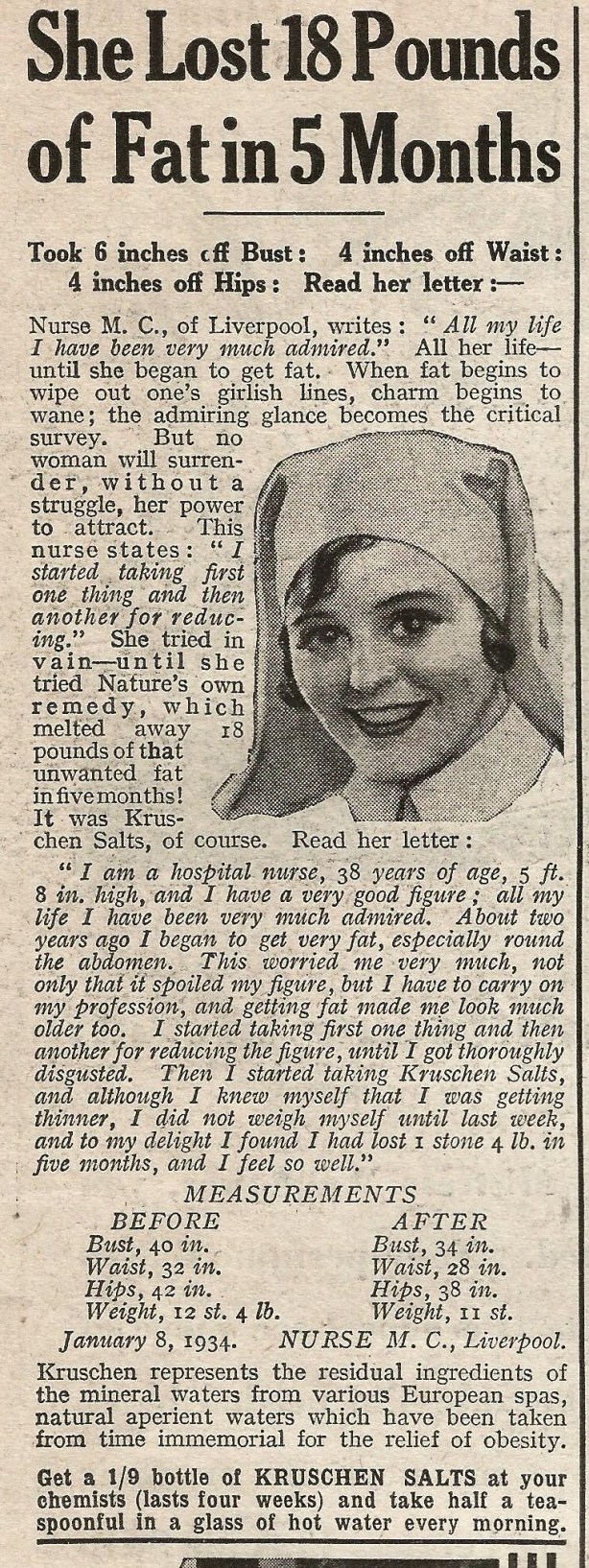
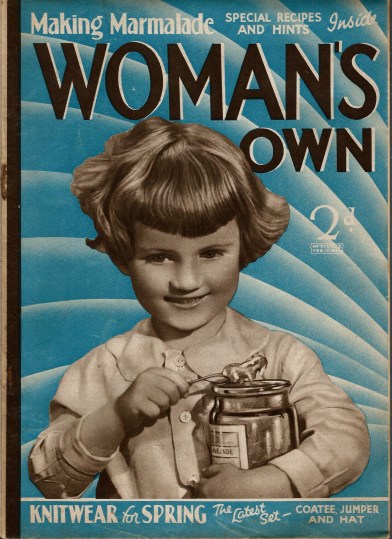 Last year I posted a couple of articles about women’s magazines from the 1930s. (If you missed them, you can find them

 Hubby Management: It’s the wife’s job to make her home as welcoming as possible to induce the man (and man ONLY!) to stay at home instead of going out gallivanting. tips are given on how to do this, though the mags expert – whoever that was, possibly (we don’t know!) a bloke – comments that some men will always stay out and shouldn’t get married in the first place. Too late if you’ve got one of those, girls!

 There’s a load of fashion tips and ideas, mostly, I was interested to note, clothes you could make at home. This magazine is aimed at the upper working class and lower middle class, women who have a little money but not enough to buy off-the-peg items and certainly not bespoke. ‘Home economy’ was one of the watchwords of the day, and it included apparel.



You must be logged in to post a comment.