 I thought I’d already shared this, but I can’t find it anywhere, so here it is, a sneak peek of the opening scene of chapter one, possibly for the second time. (and sorry, too, it’s a bit long…)
Book 8 of the Dottie Manderson mysteries finds Dottie fed up with waiting and all the fuss, and just wanting to get on with being Mrs Detective Inspector William Hardy. She and her mother and her sister all want different things, and Dottie thinks, ‘It’s my wedding, it should be how I want it!’ An unexpected invitation could be just what she needs. How wonderful it will be to get away to a weekend house party and forget all the worries of organising a wedding!
Of course William, like all husbands-to-be everywhere has no interest whatsoever in the problems of the right kind of lace or the perfect place setting. In any case, he’s got a special kind of investigation going on, one that means bringing a good friend to justice, stretching his loyalty to his profession almost to breaking point.
Dottie Manderson was already fed up to the back teeth with parties. Admittedly, she thought, one expected parties in June. And just lately life had been nothing but. Tennis parties, tea parties, afternoon dancing parties, mid-morning tea parties, dinner parties, drinks parties in the evening, it was endless. And now, socialising in London was giving her a sense rather too much like continually stepping over graves—those of dead friends as well as dead relationships. Wherever she went, dragged along by her mother or her sister, or her mother and her sister, to various events in so many houses and gardens, she was continually running into people she either knew, or had heard of through other acquaintances.
This evening was a case in point. They were at the Sir Nigel Barrowby’s lavish Tyne Square townhouse for dinner and dancing. Dottie hid behind the same half-glass of white wine she had been clutching for almost two hours and looked about the room.
Over there by the fireplace, hanging on the arm of a man with a military moustache, was Anabella Penterman nee Wiseman of the New York Wisemans, married to Dottie’s almost-beau Cyril Penterman less than a year and a half ago, and yet now if the gossip columns were correct, the couple were very publicly living separate lives, and divorce seemed to be on the cards. The woman had glanced at Dottie four times now, though only managing a polite smile the first time, every other occurrence accompanied by a bright hard stare. Dottie noted that the woman had lost a lot of weight, and her left hand held no rings.
Then, on the opposite side of the vast drawing-room was the Honourable Peter St Clair St John giggling rather childishly, in Dottie’s opinion, with a couple of really quite young girls.
‘Far too young for him,’ Dottie murmured out loud.
‘Oh definitely, dear,’ replied a woman standing a few feet away. She drew a little closer, saying in a low tone, ‘I don’t know what their parents are thinking, introducing them to that wolf.’
 ‘Is he a wolf?’ Dottie turned to face her companion, a blonde woman in her early thirties, immaculately turned out. Dottie felt a slight flash of recognition but couldn’t quite reach at the woman’s name. ‘I always found him a bit dull, if I’m honest. And only ever interested in himself.’
Belatedly she wondered again who she was speaking to. It wouldn’t do to say that to a close relation.
‘Well, absolutely. His only interest in his life has always been himself. A thoroughly tiresome younger brother, I don’t mind telling you. But once he gets a girl to himself, he’s all hands, from what I hear.’
Too late Dottie recognised Christiana St John Milner, the widow of the Milner empire since her husband, the Honourable Sebastian Wilcott Milner had passed away under what Dottie had always regarded as odd circumstances during an avalanche when out skiing with friends in the Swiss Alps just–what–surely it was barely six months ago, Dottie thought, yet here was the young widow in a daring dress of figure-hugging gold lame, not a single sign of mourning about her.
Catching Dottie’s glance at her dress, Christiana smiled and held out her hand. ‘I don’t think we’ve ever been formally introduced, though I’ve seen you at a number of events over the last two or three years. Christiana, please.’
Dottie shook her hand. ‘Dottie Manderson. Just Dottie.’
‘Not Manderson for much longer, I hear,’ Christiana said.
‘No, that’s true. Not for long now. The wedding is in August.’
‘Lovely. And am I right in thinking that he’s not one of our lot?’
Dottie tried not to be offended. She’d heard this a lot in recent weeks, and should really have become used to it. But still, it grated.
‘He works as a police officer, I expect you mean,’ she said, carefully keeping her tone neutral.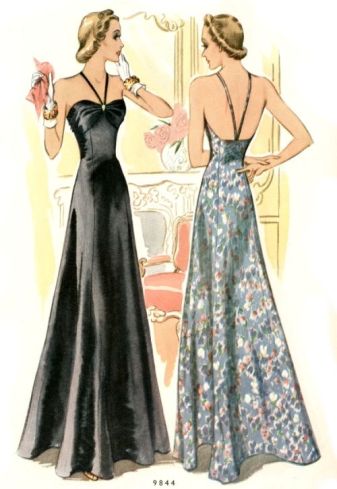
Christiana looked mortified. Her hand came out to just touch Dottie’s arm. ‘Oh, I’m so sorry. Please don’t think I meant…’ she sighed. ‘I’m sorry. I didn’t mean it quite the way it may have sounded. Oh this is a terrible start to a friendship. I’m not a snob.’ Looking into her glass, she said softly, ‘Believe me I know all too well how hard it is to find a good man. And when one is lucky enough to find him, one thanks one’s lucky stars and refuses to let go.’
‘I’m sorry too,’ Dottie said. ‘I’m afraid there have been a number of critical comments, and I’m feeling rather on the defensive. William’s family had an estate but unfortunately it was sold a few years ago to cover—er—’
‘Death duties?’ Christiana suggested helpfully.
Dottie gave slight shake of the head and a wry smile. ‘That. And debts.’
‘Ah! Well, there are plenty of those amongst the so-called upper-crust And even the aristocracy, as we both know. I can look around this room and tell you who is solvent and who hasn’t got the proverbial penny to bless himself with. Let’s start with my idiot brother. Broke,’ she smirked at Dottie, ‘Definitely not got a penny to his name. I’m so glad you didn’t fall for him.’ She discreetly pointed out two other men and a woman and said, ‘Broke,’ for each of them.
Dottie was astonished. Christiana was right. These four people were four people who Dottie would have practically gone to her grave believing to be financially stable, solvent. Inadvertently she took a gulp of her horrid wine. She grimaced ad swallowed quickly.
‘But my father is thinking of going into business with Lord Dalbury and his friend Milo Parkes. They’ve been having talks all week at Father’s club.’
Christiana looked concerned. ‘Oh my word, no! Please warn your father to get out whilst he can, they will bleed him dry!’
Dottie nodded. ‘I’ll tell him. Thank you for the tip. It’s astonishing isn’t it. As you say, one takes everyone at face value, and we make assumptions based on what we see.’
‘Which prompts me to ask, Dottie, what do you think of my dress?’
‘Oh it’s lovely!’ Dottie didn’t even have to stop and think about that.
‘It’s actually an old one of my mother’s. Yes, really, it’s more than twenty years old. She had some beautiful gowns and coats and things. Furs. Some of them were terribly expensive, and my brother wants to get rid of them. Sell them. He needs the money.’
 Dottie said nothing, wondering—or rather suspecting she might know where this was leading.
‘I’m having a house party next weekend. I know it’s horribly short notice, but I was wondering if you’d do me a huge favour. I was hoping you might know a few people who would be interested in buying Mother’s things. I don’t want them going to just anybody, but if they were people you could recommend, I might not mind too much. I don’t want it to feel like village jumble sale with everyone pawing over my mother’s things. But if I can help Peter, I feel I have to do so, he’s so wretchedly clueless. Could you spare me a weekend to come and visit, and bring your lovely fiancé, of course, and if you could just go through Mother’s things and tell me what might fetch some cash, and who might be interested… there aren’t many ‘names’, Mother went rather her own way in fashion, although there are some Carmichael and Jennings items you might be interested to see. Well, perhaps you’ll think about it and let me know. You can telephone me, I’m on Belgravia 139.’ She grabbed Dottie’s arm and said in an urgent tone, ‘Do say you’ll think about it, please. This means so much to me.’
‘I will,’ Dottie promised, and had only time to repeat these words as the music suddenly began, and a young man came to ask Christiana to dance.

***
 Because more than half of my books are set in the 1930s, I constantly find myself – even eight books in – looking stuff up. It might be easy to find stuff like ‘good poisons to kill someone with’ (My search history would def land me in a lot of trouble if anything ever happened to my nearest and dearest), but sometimes it’s deeper, more complicated stuff (ie questions such as ‘when did the UK first get direct dialling telephone systems?’ or ‘how much did a postcard and a stamp cost in 1934?’) I need answers to.


 As you know, I write genre fiction – that is to say it fits neatlyish into a specific genre type of book – I write mysteries. My books are not, by any stretch of the imagination, literary, nor are they ‘general’ what ever that is. Some writers are quite apologetic and embarrassed that they don’t write something high-brow. Not me. I believe that genre fiction has huge benefits and there’s no need to feel that I ‘only’ write mysteries: ‘Oh it’s only a mystery’ or ‘I really only like romances, I’m afraid.’


 My characters mean so much to me, they definitely feel real…


 As you know, I mainly write cozy mysteries, some set in the 1930s or 1960s, some in the ‘now’, and one even set in both the present and the past. Cozy mysteries or cozy crime is the genre where I feel most at home, and those are the kind of books I love to read. I have been reading this genre since I was about 9 or 10 years old, when I began first with the Famous Five, then the Secret Seven, then on to Patricia Wentworth and Agatha Christie. I have always loved the idea of detecting along with the ‘official’ sleuth, trying to get to the clues and figure out ‘whodunit’ before the book’s detective.
 Agatha Christie: obvs you’ve all read her books! But have you tried Death Comes As The End – set in ancient Egypt, it’s an interesting variation on the classic murder mystery genre. My personal favourites are Evil Under the Sun, Death Comes As the End, and Death on The Nile.
 Coming back to modern cozies, how about trying Helena Dixon? I am a big fan of her Miss Underhay series, which like my own books, are set in Britain in the 1930s. Book 1 is called
 I got my first eReader around 12 years ago. It only lasted a couple of years and then needed replacing. But the one I have now, I’ve had since then, almost ten years. The poor thing should be in a retirement home for bewildered gadgets by now.

 There are a number of components to creating a book, and I’ll admit I hadn’t realised just how much was involved when I set to write my first one. Which has still not been published, by the way, it was truly terrible. You’re welcome.
 Then my technical – or lack of – skills come into play. These were the things that provided the biggest learning curve for me as a new self-published writer some years ago. I didn’t have the money to pay someone to do all this for me, and I wasn’t with a traditional publishing house who do so much for their authors. So I had to learn how to create a reasonable book cover, (Canva, I love you so much), how to format my eBooks and paperback books, and how to make marketing materials. I had to learn what metadata was, and how to use advertising. I had to learn to negotiate the online world to publish and market my books. People were very kind and there are loads of helpful sites and books if you get stuck or don’t know how to do something, but you have to be determined to work your socks off and learn a ton of new skills, even if you are not a techy kind of person.


 And that’s it. I suppose what I wanted to say really was, wow what a huge number of really special people were on Desert Island Discs. It’s no wonder it’s considered an institution. I would love to have spent half an hour talking to so many of those people, sadly no longer with us. If you want to know more, you can take a look on Wikipedia:


You must be logged in to post a comment.