From Idea to Publication

There are a number of components to creating a book, and I’ll admit I hadn’t realised just how much was involved when I set to write my first one. Which has still not been published, by the way, it was truly terrible. You’re welcome.

A writer begins with the germ of an idea, a creative spark, just a little something that falls into the imagination from the ether and says, ‘Hey, you know what would be a good story? This…’ It’s hard to say where inspiration comes from. It’s the first question people always ask me: ‘Where do you get your ideas?’

And it’s almost impossible to answer that, because ideas or inspiration can come from so many, many varied sources, and are often a kind of amalgamation of a number of different threads that come together seemingly from nowhere. I wrote a blog post about this a while ago. If you’d like to read it, you can follow this link:

After the germ or spark, comes the ‘mulling things over’ phase. You begin to add more and more to your idea, like the layers of an onion. You test it to see if your initial thought will work in practice. You begin to think of snatches of dialogue, or scenes or names or any number of little details that add the colour and richness to your bare bones. At this point I usually have to start making notes, a bit worried I’ll forget something – I know what I’m like!

Then comes the beginning of the writing. For me, this usually happens quite quickly – I feel very excited, I write as fast as I can in an actual paper notebook, I’m not one of those people who creates a first draft on a computer or who uses a special app. This is the honeymoon phase that I never want to end. It is joyful and fun.

BUT.

Then comes the dark night of the soul, the ‘I can’t write for toffee’ phase, imposter syndrome raises its ugly head, and I am consumed with doubts about myself, my ability and my work. At this point all I can do is to dig deep and become really stubborn and tell myself I WILL do this. I push on, writing even though I’m pretty much convinced that it’s a waste of time. I didn’t realise until just a few years ago that almost everyone feels like this about their work, whatever it is. It’s taken me many years to realise that persistence is my most valuable tool. Another thing I’ve blogged about before!

Finally my first draft is complete. I let myself and my story rest for a few weeks or several months. I take a break to enjoy doing other things, like cooking or gardening, I read loads, sometimes do a bit of editing or proofreading. I blog, of course, and dip in and out of social media. Or dare I say it – I might go out – (we are able to do that now in the UK, not sure if that will all change again, it still seems a bit naughty to go out of the house for anything other than the bare essentials).

There’s till loads to do on the book. A first draft does not a book make, and I will need to revise, edit, polish, revise, edit and polish several times over before it’s ready to be ‘properly’ edited, have a final proofread, then released on an unsuspecting world. At this stage, I need to let go of my favourites – not necessarily in a ‘kill your darlings’ kind of way, but just letting go of scenes or phrases and being honest with myself if they just don’t work.

Then my technical – or lack of – skills come into play. These were the things that provided the biggest learning curve for me as a new self-published writer some years ago. I didn’t have the money to pay someone to do all this for me, and I wasn’t with a traditional publishing house who do so much for their authors. So I had to learn how to create a reasonable book cover, (Canva, I love you so much), how to format my eBooks and paperback books, and how to make marketing materials. I had to learn what metadata was, and how to use advertising. I had to learn to negotiate the online world to publish and market my books. People were very kind and there are loads of helpful sites and books if you get stuck or don’t know how to do something, but you have to be determined to work your socks off and learn a ton of new skills, even if you are not a techy kind of person.

But finally, the big day dawns and your book – or my book, in this case – is out there is the big wide world. It’s a bit scary, doesn’t seem real, and is hard to believe you actually made it from that first little spark of an idea months or sometimes years earlier. The book writer’s journey has often been compared to pregnancy and the birth of a child. I think that’s a pretty good analogy, especially when it comes to the ‘don’t you ever come near me again’ part of the process, and the shouting, swearing and throwing things. Certainly I’m not raring to get writing another book as soon as the first one has come out. I need my recovery time of a month or two before I’m ready to start all over again.

Aww, doesn’t my new baby look cute?

***

Desert island author

‘I thought this was voluntary?’

I’m thinking of doing my own mock-up version of Desert Island Discs. For those of you who don’t know, there is a long-running radio show called –you’ve guessed it—Desert Island Discs. Each week a guest selects their favourite music along with a book and a luxury item to take with them to be stranded (I assume deliberately) on a desert island. It’s a fresh (even now after over 3000 episodes) way to interview celebrities of all kinds and find out what makes them tick.

A certain amount of belief needs to be suspended here as we are assuming a minimum level of survival comfort and apparently electricity on this desert island… Try not to worry about the details. (How did the stranded person get there? What if they need medication? A special diet? How long will they be there for? What furniture/food/shelter/clothing do they have? Are they alone? Where is the fresh water supply? What about a loo? Ignore all that.)

Just out of curiosity I Googled the show and it’s been running since 1942!! I was astonished. Hugely famous and influential people have guested on the show, here are just a few names to wow you:

Ivor Novello, Humphrey Lyttelton, Leslie Howard, Arthur Askey (at least twice), Wing Commander Guy Gibson, Claire Luce (who took the original part in Gay Divorce when it was a play, before Ginger Rogers made it her own in the movie, I based my first Dottie book, Night and Day on this version.) Michael Redgrave, Celia Johnson, Deborah Kerr, Stewart Granger, Peter Ustinov, Ian Fleming, Alfred Hitchcock, and so many, many more. The castaways were not just British actors, musicians, Members of Parliament, war heroes and other popular names, but there were many, many others including US stars and notable figures: Tyrone Power, Count Basie, Blanche Thebom, Earl Hines, Paul Robeson, Dave Brubeck, (quite a few musicians, I notice), Paul Gallico, Regina Resnik, Tallulah Bankhead, Louis Armstrong, Andre Previn, and James Stewart.

Me playing the piano in my ballgown as my leggings dry on the sand…

James Stewart chose a piano as his luxury item. Actually most people seemed to choose notebooks and writing implements, or canvases and paints to take as their luxury item. Perhaps there is a sense in all of us that thinks that, given enough time, we’d get through all our routine basic duties or tasks and finally have a moment to do what we really want to do – be creative. Others wanted to take photos of their family, or their favourite tipple: plenty of good quality claret was requested!

Don’t ask me to do without this…

It’s odd, isn’t it, discovering what is most important in our lives? If we know our loved ones—and the cat/goldfish/gerbil are safe, what else is important? If you’re going somewhere with no shops, businesses or commerce, do you need money? Or jewels? Or designer clothing?

Here are my own 8 choices of music. I should just say, I like most kinds of music, but some are dearer to me than others. I cheated by going for albums rather than individual tracks 😊.

  1. Corinne Bailey Ray’s album called ‘Corinne Bailey Ray’.
  2. Riverside’s ‘Out of Myself’.
  3. Nina Simone: ‘Feeling Good: The Very Best of Nina Simone’
  4. Handel: Messiah (this is a big compromise as I like different versions of this by different orchestras/choirs depending on the track…)
  5. Paul Weller’s ‘Modern Classics’.
  6. The Very Best Of Jimmy Somerville, Bronski Beat & The Communards (You can get a lot of extra mileage with ‘best of’ compilations, just a little tip for you, in case you’re ever in this situation.)
  7. Simply Red: ‘Men and Women’.
  8. Can I bring the whole set of ‘The Marriage of Figaro’? I don’t think I can choose just one track… It won’t take up much room, I promise. Oh, and the libretto so I can sing along – there’ll be no one around to scare with my voice.

And for my book—Again, to show just how times have changed, and also, to bend the rules a wee bit, I’ll take my Kindle eReader. Hahahahahaha! (charging point is assumed…)

Which means, my luxury item is going to have to be a bottomless tub of Options white hot chocolate too. Then I’d truly be happy.

Oh wait, I forgot my notebooks and pens. No, it’s okay, my Kindle has got my Evernote note-making app on it. Phew. For a moment I almost got out of the boat and went home again.

And that’s it. I suppose what I wanted to say really was, wow what a huge number of really special people were on Desert Island Discs. It’s no wonder it’s considered an institution. I would love to have spent half an hour talking to so many of those people, sadly no longer with us. If you want to know more, you can take a look on Wikipedia:

https://en.wikipedia.org/wiki/Desert_Island_Discs

Or on the BBC’s page:

https://www.bbc.co.uk/programmes/b006qnmr/episodes/player

Who would you want to interview?

If you were the castaway, what items would you take with you? What music would you choose? It’s a dilemma!

***

Ten (awful) things about me

Of course, I don’t wear the anorak all the time. It’s for special occasions.

I thought I’d tell you ten things you might not know about me. Why? Well, we’re all besties now, right, so that means I can off-load some of my mess special characteristics and just—you know—really be myself with you.

  1. I got a 10-yards swimming certificate when I was ten years old. So if I’m ever on board a boat that sinks really, really close to the shore, I’ll be fine.
  2. When I was out for a walk with my family in a park when I was eleven years old, I needed to go to the bathroom, and there were no bathrooms, so I went behind a tree, and a man and his dog came over and asked if I was okay. (I didn’t realise there was a path behind the tree as well as in front of it.) I was too embarrassed to say I was peeing, so I made up a totally unlikely story about losing my pocket money behind the tree and said I was looking for it. Crouched there as I was, I half-heartedly raked through the  leaves by my feet. The only problem was, this kind man decided to help me look for it…. It was about five long minutes before he must have realised what was going on, and with a panicked expression got up, said goodbye, and that he hoped I’d find my ‘pocket money’, then he and his dog ran! Aww. My parents laughed, but I was mortified.
  3. I failed my English Literature ‘O’ level. Though I later went on to complete a Bachelor’s degree in English and History so I certainly showed them!
  4. I also failed my Sociology ‘O’ level. Ironically, it was the only subject I really studied hard for. I must have guessed how bad I was at that subject. To make matters worse, my teacher told my parents I wasn’t going to pass and so they had to pay for me to be allowed to sit the exam. All for nothing. Is it too late for a resit?
  5. I love cats and dogs but I’m allergic to fur and dander.
  6. I love learning new languages, but I am hopeless at it. I always get the different languages muddled in my head, and I may start a sentence in French, but I’ll just as likely end it in Spanish or German…
  7. I once peed myself laughing with my cousin, then had to throw myself in a handy nearby river to disguise my ‘accident’ so as not to get into trouble with the dreaded parents. I was about twelve at the time. I was a horrid child! I also fell into a river on Boxing Day, then sat in a tree in my underwear hoping my clothes would dry in the breeze and went home an hour later frozen half to death in sopping wet clothes. Me and bodies of water do not get on.
  8. My work experience week coincided with my sixteenth birthday, and I was sent to spend a week with the local newspaper. I spent my sixteenth birthday covering court cases as a junior reporter. It was fascinating and I got well and truly bitten by the true crime bug!
  9. I once rode my bike into a fence and smashed it. And I took myself to the front door of the fence owner to confess all. He was so astonished at my honesty that he let me off. (Another pre-teen escapade!)
  10. I got thrown out of our school’s church service for asking too many questions about God. I wasn’t even a disbeliever, I just was asking tricky theological questions, which apparently was not okay. (Still eleven!) Oh well. I also got a prize in school prize giving for Religious Education, so maybe they forgave me after all.

So yeah. That’s me. I can kind of see how I ended up being a writer.

***

Extras… the minor characters every mystery story needs

Extras complaining to the author about not having a name – again.

Last week was all about the main characters – the detective, the villain, the side-kick and of course the victim(s).

This week, I’m interested in thinking about the minor characters – or extras – in my head I see these as a kind of walk-on part, much like those in any TV show or movie. They don’t always have lines. Sometimes they don’t even have names. They might be described as ‘an elderly dog-walker’ or ‘the woman behind the shop counter’. They crop up everywhere the story goes – in shops, houses, on village greens, in museums, and at dinner parties.

But why are they there?

Extras fulfill a number of criteria and needs for the author and the reader.

  • they can deflect attention away from the culprit or villain.
  • they can provide the reader with useful clues or snippets of information.
  • equally, they can provide us with (less useful, sometimes) red herrings and wrong-turns.
  • they enrich the story so it doesn’t consist of just your four main characters, unless that’s the whole point of the story.
  • they can give us a sneak-peek of something that might happen in a later book if this is a series.
  • they act as a kind of commentator or dramatic chorus to comment on the action or criticise or laud the ‘hero’.

But life as an Extra can be tough and is often unpredictable.

Police or other people in authority (completely unaware all too often that they themselves are Extras, can bully them or wrongfully arrest an Extra and accuse them of terrible things they haven’t done.

You need a huge range of skills as you may be called upon to perform almost any task from forensic assistant to chambermaid.

As an Extra, you might be completely overlooked by the reader who doesn’t even notice you, let alone what a magnificent job you do pretending to be an elderly dog-walker when you’re really a young woman in her twenties on her way to college and you don’t even like dogs.

Alice was at the party with two friends. Who were they? No one knows.

And they never remember your name, which is why you have to have a description attached: Miss Jones, the games mistress at school where victim used to teach. You might even find yourself very near the bottom of a long list of characters, a list designed to help readers remember all the people in the book they’ve met but don’t remember.

No one asks your opinion. ‘Tell us, Poirot,’ they cry, at the end of the book. ‘Who did this dastardly deed? and why?’ I mean, all the Extras probably know this information too, don’t they. But no one ever asks them. They just come in with the tea tray and leave without anyone noticing.

Likewise, no one ever asks an Extra if they’re okay and how they feel about being shut up in a big country house with loads of stairs, and a murderer roaming about bumping people off willy-nilly.

And as if all this is not enough, when the author gets bored, you might even end up as the next victim, just to ‘spice things up a bit’.

How is that fair? It’s not just a policeman’s life that’s terrible hard. Try being an Extra for one book, let alone a whole series. I’m only surprised they don’t have a union.

‘I hate being in crowd scenes,’ said the person in the red outfit. ‘So do I!’ said another person in yellow. ‘It’s so anonymous.’

***

The Big Four: the four main characters in a murder mystery

I love murder mysteries. I doubt this comes as any kind of a surprise to most people reading this blog. Characters in a murder mystery fall into one of two categories: they are either part of the Big Four, or they are Extras. This week I want to quickly chat about the Big Four.

Who are the Big Four?

The Big Four are the main characters without whom we would have no murder mystery. They are: The Victim(s), The Villain(s), The Side-kick(s) and The Detective(s).

And yes, they often come as a pair or even more, not just as a lone individual. Detectives, for example, often come as a pair – one an amateur and one a professional. Villains too, can sometimes deliberately confuse the reader by sharing the limelight with another villain, and share the crimes too.

And who doesn’t love a high body-count? Why stop at one Dastardly Deed when you can have two, or three, or…

Let me introduce you…

The Victim(s)

Victims, as avid mystery lovers know, are always bumped off for a reason. And obviously it is The Detective(s)’s(s’)(??) job to discover why and bring the perpetrator to justice.

The richer, the more arrogant, cruel, cold, grasping, greedy and crafty our victim is/was, the better we like it, don’t we? We can then take a vicarious pleasure in their demise as we would never, ever do such a thing ourselves in real life. And the worse they are, the nastier and more creative their all-too-timely death should be. BUT.

They can’t be so bad that we don’t care if their killer evades detection.

In my view, ideally there should be two or three of these demises per mystery because, if I’m honest, I’m always a bit disappointed if there’s ‘only’ one.

The Victim is there for one reason only–to make us, the reader feel clever:  to provide something for The Detective to detect, of course.

The Villain

Whenever I hear the word ‘villain’ I always think of a man in a swirling black cape and top hat, twirling his moustaches menacingly (or smugly, either will do)and saying ‘Mwah haha’.

Sadly, the days of Dick Dastardly have gone, (drat, drat and double drat) and nowadays The Villain can look like anyone:

A little old lady.

A priest.

A stalwart Major-type.

A handsome young man on his honeymoon. (I’m looking at you, Death on the Nile.)

A nurse. (Sad Cypress)

Even a child. (Crooked House)

The Villain is often charming, often invokes our sympathy due to baggage and issues, and can even make us think, ‘Aww well, she/he’s had a tough childhood, maybe we should kindly overlook those four grisly murders and let her/him have a new chance at life.’

We must be on our guard at all times throughout the book until the moment this villain is unmasked.

The Side-kick

The Sidekick has a demanding role. They are there as a kind of placeholder/proxy for the reader.

They must be clingy to the point of irritating, sticking by The Detective’s side when they really should go away and leave him/her alone to think things through. But no, they stick around at all times, asking stupid, inane and tedious questions, so that we don’t have to. We sit at home in our comfiest armchair and loudly exclaim, ‘Rookie mistake, I already knew that…’ but really we’re thinking, ‘Ooh I wasn’t sure, but now that you mention it…’

The side-kick – desperately needed to help us survive the journey

So they are there to help The Detective and the reader to find the evidence and the clues and to arrive at the truth of the mystery.

In fact they don’t create a dialogue, but they are the dialogue – through The Side-kick, the reader can talk to The Detective and The Detective can talk to us.

And finally:

The Detective*

The Detective can be anyone.

Rather like The Villain, The Detective can be a law-and-order professional, or someone from an associated profession (forensics, psychology…), or an amateur with a gift, a nurse, a priest (The Complete Father Brown stories) a stalwart major-type, a nurse, a handsome young man on his honeymoon or even a child (The Sweetness At The Bottom Of The Pie).

The Detective has one job and one job only: to find out whodunit and bring them to justice.

It’s essential that her or his main characteristics include:

Passionate desire for justice, even at risk to self, it goes without saying, I hope.

Incredibly close attention to detail: ‘Sacre bleu, this dust is 3.14159 milimetres in ze thickness, therefore the killer was the maid and the crime was committed on Tuesday afternoon.’* The whole case may depend on just this kind of minuteness.

‘Mesdames et messieurs, allow me to reveal at last, the identity of the criminal’.

Very keen observation skills: ‘Zut alors, the footprints in the mud are of a depth of 3.14159 milimetres, therefore we must find a person of 6 feet 1 inch who weighs 189lbs.’

From the two above attributes, we can also see that they must be good at mathematics too. 

Lastly, the Detective must have a huge ego: We readers love to have all the suspects in a room at the end of the story, and to be taken step by step through the crime to learn the identity of The Villain, and to have the satisfaction of them being led away in handcuffs. Therefore it is essential that our Detective loves to show off just a little and to deliver a lecture on how clever he/she is and how many different things we missed.

So next time you are reading a mystery, keep a handy notebook and pen by your side, so you can check for all these points!

*must supply own white hat

*sorry btw, for me all fictional detectives are Hercule Poirot, even when they’re not

***

Come back with me: It’s 1935 #timetravel #daydreaming

Coming soon to a posh drawing room near you…

Let’s play a game of ‘what shall we do this weekend’.

I’ve been thinking about how amazing it would to travel back in time to the actual 1930s* instead of just daydreaming/writing or pretending/obsessing about it…

This is what I’ve come up with:

Things I’d be excited to do/try:

A posh weekend at a country house with lots of people who are glamorous and speak nicely.

Ditto the big frocks and hair-dos.

And gloves and hats.

And the four/five/six course dinners.

Bridge evenings.

Going to the house of someone posh for ‘drinks’.

Dancing to the radio in a kind of impromptu disco at home with dinner guests.

The excitement of talkies – films with speaking actors!

Meet Gary Cooper when he was young and gorgeous…

And knowing there is a study or library, and perhaps even secret passages.

And bell-pulls to summon people from the depths of the house. I’d be like a child, ringing the bell then have to run away as there would be no legitimate reason to ring for them…

Maybe a maze? Or a rose garden? Or both? What about a croquet lawn? I am certain I’d be an amazing talent when it came to croquet. I can always bowl a great croque.

It might be nice to – very occasionally – have all the men stand up out of politeness when I come into the room. Or stop using bad words because I am in the vicinity and am a ‘lady’ (until they get to know me better, of course).

Travelling by steam train in the actual era they were used, not just on a preserved line in my usual jeans/t-shirt combo.

Things I’d miss terribly:

Being able to say all those bad words that are so good for stress relief when things go wrong. In the 1930s, I’d probably be vilified for my potty-mouth. Though to be fair, most of my rage is triggered by modern technology so it wouldn’t be an issue in the 1930s, when a telegram was still pretty exciting, and indoor plumbing was all too often a thing reserved for the gentry.

Sorry if I’ve destroyed your illusions about the way a writer speaks/acts/looks, btw.

My freezer, and my microwave.

Going to a cafe ALL the time to sit and watch the world go by whilst pretending to write.

The Internet (sorry to all you nay-sayers).

Nipping to a supermarket – even on a SUNDAY to get the bits and pieces I completely forgot I urgently needed.

Books by all my favourite post-1930s authors such as Ann Cleeves, Helena Dixon, Julie Wassmer, Helen Forbes, Emma Baird…

TV: Midsomer Murders/Death in Paradise/Vera/Madame Blanc/Strike/Van der Valk/Darby and Joan/Three Pines/The Chelsea Detective/Dalgliesh/Whitstable Pearl… (can you spot a trend here?) 

All my modern vaccinations – I don’t want to catch diptheria/small pox/scarlet fever etc

Being able to slob about in jeggings and a baggy jumper – because I reckon there could be times when looking posh 1930s-style might just be too much effort…

Being allowed an opinion about anything other than babies, flower arranging or hair-dos.

So what do you think? What would you be desperate to see/try/person to meet? Or what would you miss the most? Or what about another era? What would be your perfect era to visit if that were possible?

*obviously I’m dragging my poor family along with me – I wouldn’t dream of going anywhere exciting without them.

***

The Language of Flowers #flowersinbooks #literaryquotes

Flowers. They are always mentioned in books, right?  Whether they are a metaphor for the transient nature of life, or for resilience, or else portrayed in a more traditional way as indicating someone’s feelings or emotions, they are the writer’s favourite motif.

In one of my books, they represent something sinister–a kind of veiled threat, when Cressida received dead flowers from an unknown source. But flowers have been written about for centuries by some of the world’s greatest authors.

Do you recognise all of these quotations? There’s no prize, but you can feel very proud of yourself if you do! Hopefully after reading a few of these, you’ll feel as though you’ve had tea in the garden on a sunny afternoon.

“If a kiss could be seen I think it would look like a violet.”

L. M. Montgomery: Anne Of Avonlea

″‘Really, there’s nothing to see.’ Nothing… only this: a great lawn where flowerbeds bloomed…”

Philippa Pearce: Tom’s Midnight Garden

“How extraordinary flowers are… People from a planet without flowers would think we must be mad with joy the whole time to have such things about us.”

Iris Murdoch: A Fairly Honourable Defeat

“A morning-glory at my window satisfies me more than the metaphysics of books.”

Walt Whitman: Leaves of Grass

“In joy or sadness, flowers are our constant friends.”

Okakura Kakuzo: The Book of Tea

“Through primrose tufts, in that green bower,

The periwinkle trailed its wreaths;

And ’tis my faith that every flower

Enjoys the air it breathes.”

William Wordsworth: Lines Written in Early Spring

“Nobody sees a flower – really – it is so small it takes time – we haven’t time – and to see takes time, like to have a friend takes time.”

Georgia O’Keeffe

“All day in grey rain

hollyhocks follow the sun’s

invisible road.”

Basho (translated by Harry Behn)

“Have you blossoms and books, those solaces of sorrow?”

Emily Dickinson: Letters


“All the men send you orchids because they’re expensive and they know that you know they are. But I always kind of think they’re cheap, don’t you, just because they’re expensive. Like telling someone how much you paid for something to show off.”

Winifred Watson: Miss Pettigrew Lives for a Day

“You can see the goldenrod, that most tenacious and pernicious and beauteous of all New England flora, bowing away from the wind like a great and silent congregation.”

Stephen King: Salem’s Lot


“And over walls and earth and trees and swinging sprays and tendrils the fair green veil of tender little leaves had crept, and in the grass under the trees and the gray urns in the alcoves and here and there everywhere were touches or splashes of gold and purple and white and the trees were showing pink and snow above his head and there were fluttering of wings and faint sweet pipes and humming and scents and scents.”

Frances Hodgson Burnett: The Secret Garden

“There has fallen a splendid tear

From the passion-flower at the gate.

She is coming, my dove, my dear;

She is coming, my life, my fate.

The red rose cries, “She is near, she is near;”

And the white rose weeps, “She is late;”

The larkspur listens, “I hear, I hear;”

And the lily whispers, “I wait.”

Alfred Tennyson: Maud Part 1

***

Van Gogh and the need for models

When Vincent van Gogh wrote to Emile Barnard in 1889 from the asylum in which he had voluntarily placed himself, he said he was ‘suffering under an absolute lack of models’. He was not talking about people to pose for him to paint, he was talking about people to look up to, professionally, role models, people he aspired to follow and to learn from. He was faithfully working on his painting, turning out canvas after canvas, but had no one close by who could help him grow as an artist.

Alice Walker, in her collection of essays entitled In Search of Our Mothers’ Gardens (such an inspirational book, I still have the battered copy that I bought in 1989 in London’s Tottenham Court Road at a bookshop specialising in feminist and womanist works) quotes this moment in Van Gogh’s life, and discusses it in “Saving The Life That Is Your Own – the importance of models in the artist’s life”. She highlights the need for writers–and all artists–to find worthy and strong role models to help us grow and develop our skills. Her book helped me hugely as an aspiring writer in my late 20s.

There have been a number of special books which have influenced me as a writer over the years. Here are some of them. (Some of them are quite old now, but I think you can still get them…)

In her 1934 masterpiece Becoming A Writer Dorothea Brande said, “A writer writes” which writers hear everywhere, and you may think it’s an obvious statement to make, but think about it for a few minutes, it’s deeper than you think. It’s not about writing being just a one-off event, ‘I wrote a book’, but an ongoing, permanent relationship with words. This book is considered a little out of date by some or a bit patronising, but for many writers, Brande’s book is the seminal work aimed at writers who are right at the start of their writing journey, or who have lost their creative impetus and need a fresh perspective.

Writing a book can be compared to climbing a mountain, and the higher you get the more scary it feels if you stepped back from the process to look at what you were doing. So, as Mary Wibberley in her book To Writers With Love said, ‘Don’t look down!’ – just keep moving forwards until you reach the end. Or should that be, THE END. She also commented that finding your story is rather like creating a sculpture out of a block of stone. It takes time, and you shape the story roughly then polish and hone, several times. This book was another huge help to me as a new writer.

Alice Walker taught me that in spite of this need writers often have to be alone to concentrate on their writing, we also need others to look up to and observe and learn from, to share our journey with, to laugh with, to cry with, and everything in between. I–and you–cannot grow or function in isolation. And life’s journey is too hard to spend all your time alone.

It has never been easier than today to find others for inspiration and support. Many of my closest friends are other writers I have come across through conversations on social media. And they have got me through so many tough times, times when I felt discouraged, or felt like giving up, or felt like nothing seemed to be working. I am so grateful to them. If I ever win an award, my ‘Without whom…’ speech will be long and tearful. The internet is full of tips, hints, writing websites, blogs, epublishing platforms, how-tos and advice, writing circles, book reading groups, as well as technique and knowledge webinars. My advice is to dig into these writing groups, make friends and be kind. We all need the human element. There is no need to suffer under a lack of models any more.

It is an odd thing, being a writer, because just like other ‘normal’ jobs, sometimes you don’t want to do it, you don’t want to write, or you’re fed up with everything you write: it feels stale or trite or clichéd or flat or bumpy or… ‘hard, dry…’ Sometimes you hate being a writer. Sometimes you write something so good, you can’t believe it came from you. Or you become convinced you have depleted in one sentence your entire reserve of ability, and that you will never be able to write again. Other times you feel as though you’re banging your head against a brick wall, desperately trying to get an idea out, and you can’t even remember what a verb is.

Van Gogh said, “However hateful painting may be…if anyone who has chosen this handicraft pursues it zealously, he is a man of duty, sound and faithful.”

All Van Gogh’s works now with free cat

It does sometimes feel as though, as writers, we are undertaking A Quest as we try to ensure our red herrings are subtle but present, and our sleuths remain believable and appealing yet somehow stand out from the crowd of other fictional sleuths. Loathing may be present for at least a third of the book. You may well come to dread the very thought of looking at your draft again. But look at it you must, for the good of the book, and your writer’s soul. And you have to make yourself do it even if you don’t want to. You can’t just sit and wait for inspiration to strike. As many well-known and successful authors have commented, if you only write when inspired, then you’ll probably never write a thing.

Van Gogh went on to say, “What I am doing is hard, dry, but that is because I am trying to gather new strength by doing some rough work, and I’m afraid abstractions would make me soft.”

Like him, we devote ourselves to diligently plodding through our notes, our research, our first drafts and our revisions. At times it feels like hard, dry work. But we cannot leave it until later. If we do, we will lose our impetus, we will forget that special key phrase, that small detail on which the whole plot turns. Therefore it’s important to keep going, keep moving forward. But you don’t have to do it alone. Join a group, make friends, open up to others and as they embrace your work, you can embrace theirs.

Be careful with your criticism. Remember their style may not be yours, their story may differ from yours, their experiences, their character – they are not you. But like you, they have a dream – so try not to trample, but to encourage. One harsh word or thoughtless comment can make someone give up writing for weeks, even months, so be kind, be gentle. We creatives are sensitive people. You may not ‘gel’ with everyone, but those you do, support them wholeheartedly. Try to keep an open mind. You may not like or agree with what people say about your work but listen to them anyway, consider what they say, don’t get miffed or precious: you need these people and they need you. And more than one viewpoint is valid. Together we can get our work drafted, revised and rerevised, edited, rererevised, proofed then put it out there into the world for the reading public, sharing one another’s triumphs as well as the doubts.

***


These fragments I have shored against my ruin

I first shared this blog post in 2016. To date, it’s still my best-performing blog post. Not sure if that is because it’s one of my shortest – I am quite a waffler these days.

But I love that line. It’s line 431 from T S Eliot’s The Waste Land. The first time I read the poem, when I got to this line I burst into tears, because it seemed such a beautiful summation, of the poem, of my life, everything. Words do that to me–I’m a very emotional person, I’m glad to say.

I believe that our lives are made up of fragments. We are, in essence, a walking, talking collection of every experience we’ve ever had. This includes what we’ve read. Words.

So often I am out and about–yes, I escape now and again–and I hear something, see something, smell something which provokes a memory of something I’ve read. Most often it is snatches of conversation I overhear, being nosey and a crime writer, which as we all know gives me special dispensation to eavesdrop on others. (‘I ain’t been dropping no eaves, sir, honest.’) Words seem to lead to more words.

I hear someone say, ‘The wonderful thing…’ and mentally I’ve added ‘…about Tiggers is Tiggers are wonderful things.’ (I didn’t promise it was anything erudite!) Or someone may say ‘Wherever I go…’ and I think to myself ‘there’s always Pooh, there’s always Pooh and me.’ (By the way, Winnie the Pooh is not just for kids. Just read the chapter called The Piper At the Gates of Dawn…)

It’s not just A A Milne, though. So often snatches of Shakespeare, Agatha Christie, songs, poems, plays, hymns, prayers, all sorts of words come into my head. I can’t look at spring flowers without thinking ‘A host of golden daffodils’ or ‘April is the cruellest month’. (The Waste Land again!) A tall person becomes ‘thou painted Maypole’. A mouse is a ‘wee sleekit cowrin tim’rous beastie’. (Burns of course, who else?)

If something annoying happens, I hear Miss Marple whisper, ‘Oh dear, how extremely vexing,’ or I hear someone say something stupid, and Mr Bennett’s frustrated, outraged, ‘Until you come back…I shall not hear two words of sense spoken together’ comes to mind. I share his pain. In extremis, ‘I shall be in my library; I’m not to be disturbed.’ (Not unless there’s cake or Midsomer Murders.) Or I might hear Miss Silver’s indulgent, ‘In their own way, men can be quite useful.’

Or if sorrows come in, it’s Matthew Arnold’s painful comment filled with longing, ‘Ah love, let us be true to one another,’ because he believed that one another was all we have. (Dover Beach).

Or…

There’s always another wonderful sketch of words from someone who lived many years before my time. Or a contemporary. Or the next generation. We all use and need words.

And because of this, none of us can ever come to a text, for the first time, or the tenth, ‘cold’ or ‘new’. There is really no neutral approach in the human soul. We bring with us the sum of all our experiences and emotions, our world-view and our beliefs, and those inform what we read, and mercifully sometimes, what we read can inform all those things too.

When I was studying literature ‘back in the day’, I remember The Waste Land was one of our set texts. Critics deplored it, dismissing it as a pastiche, a patchwork quilt of other peoples’ work, revealing only a good memory for quotations. Students shuddered and declared it was one of the worst experiences of their life. But for some of us, there was a sense of ‘wow, I never knew poetry could be like this!’

When I read his words, ‘These fragments I have shored against my ruins’ (line 431), I said to my tutor, I think he is saying that literature, that words, will save us in times of crisis, bolster us when we are at a low ebb. I was told I was wrong, but in spite of that, I still choose to believe this could be one meaning of these, for me, immortal words. These fragments of remembered stories, poems, previous experiences, feelings, of words, I have stored up, internalised, to use as a defence, shored against my ruin, my unhappiness, times of want, misery, sorrow and confusion. Ruin.

For me it is a reminder that many things in life are transient, passing, temporary, but I will always carry within me the sum of what I have read. Just read Shakespeare’s sonnet 18 and tell me I’m wrong. It’s short, it’s sweet, it’s got a cheeky grin at the end. It’s perfect, and all human life is there.

***

Holiday reading

This week, I’m being spoiled rotten by another kind author’s contribution of a blog post. So I shall immediately, and with gratitude, hand over the reins to Gordon Lawrie:
Gordon Lawrie was a secondary teacher in his native Edinburgh for 36 years until he could no longer resist the challenge of writing a novel. His first awful attempt remains buried undiscovered in a safe place, but a couple of romantic comedies followed before his first crime novel, The Midnight Visitor, appeared in March 2022. In addition, he is the Founding Director of Dean Park Press, which provides services for self-publishing authors, and the editor of the online publication Friday Flash Fiction.

 He has his own website, www.lawrie.info  where you can find lots more embarrassing information about him, as well as a great deal of free stuff to read. He also has a Twitter account: @thesaucers where he sometimes says more than he should about the government of the day, golf, birdwatching and his beloved Hearts football club.

 I’m pretty addicted to crime fiction. I think it might my need for escapism, but I also enjoy being challenged in a non-confrontational sort of way. I’m addicted to Wordle, too.

I’ve written a handful of novels now, some of which have been better than others. What seemed to work best for me was romantic comedy, but there’s little money in romcoms unless Danny Boyle or someone equally famous decides to turn your novel into a smash hit starring Hugh Grant. No, crime fiction is the way to go if you’re trying to make a living from your writing. Crime – whether it’s a detective thriller or a courtroom drama – not only holds out the prospect of a modest income; there’s half a chance someone will try to use the characters to turn your stories into a TV series. That’s why I started to write my DI John Knox/Sister Mary Maxwell-Hume mysteries. Shameless, I admit it.

But be under no illusion, crime writing is hard. There are so many strands to keep track of: the plot, of course; the characters; the pace; maintaining the general suspense; and of course the reader has to feel satisfied by the eventual solution. Ideally, the reader should end up feeling like the detective’s sidekick, wondering how they managed to be so stupid as to miss the giveaway clues that were the key to solving the mystery. Keep your Booker or Nobel Prizes. Writing a crime novel is the true Everest of literature.

Crime writing, though, is far from homogeneous. Readers of Caron’s blog will be familiar with her cosy country-house whodunnits (that’s an official term, not an insult, by the way). Or perhaps you prefer Raymond Chandler-style hard-boiled thrillers, usually told in the first person to allow the writer to make acerbic observations on the social circles in which he – it’s almost invariably a ‘he’ – moves. There’s a whole genre of historical crime fiction, whether it’s Brother Cadfael in a monastery, or the exceptional Bernie Gunther series mostly set during and in the aftermath of Nazi Germany. There are any number of “noir” crime thrillers: Nordic noir, tartan noir, Icelandic noir and so on. Recently, Richard Osman and others have written successful crime novels with comedy overtones. My fellow Edinburgh author Olga Wojtas is currently having lots of success with a bonkers time-travel comedy crime series. Her librarian protagonist is sent back in time to solve assorted mysteries (the latest being to exonerate MacBeth and discover who really killed King Duncan). Janice Hallett’s The Appeal is written entirely in emails and texts. There’s plenty of choice.

But although I’ll read virtually anything, my all-time favourite crime genre is what I’d term “holiday crime”. Set in some lovely location that I’m either familiar with, or would like to go to, I’m transported there as I turn the pages. I particularly like the ones set in Italy – Andrea Camilleri’s Inspector Montalbano series set in Sicily; Michael Dibdin’s Aurelio Zen set in various cities; but above all Donna Leon’s Guido Brunetti series set in Venice.

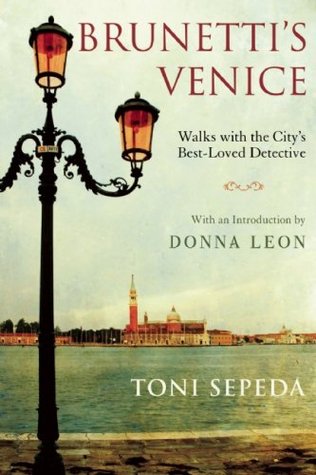
Venice is a city I think I know fairly well, and each of Leon’s novels takes me there on another holiday. An American, she was a Professor of English Literature at Venice University, and she clearly casts herself as Paola, Guido’s wife. What we end up with is a series of novels where the plot is almost secondary, sometimes even thin, but the reader doesn’t mind because there are so many other things to enjoy – the interplay between familiar characters; the politics and society of Venice; Guido and Paola’s own literary preferences; Venetian cuisine; but above all the city itself. There’s even a book of walks called Brunetti’s Venice where you can trace the steps of the great man for yourself. (I’ve done a couple. How sad is that?)

Living in a tourist hot-spot like Edinburgh, you’d think I’d find it easy to weave the city into my books. But there are so many outstanding crime writers who also live here – Kate Atkinson, Ian Rankin and Alexander McColl-Smith to name just three – that I feel rather in awe of their skills. And because writers still have to concentrate on plot, characters, pacing and all the other aspects of a novel, they also have to be careful that describing ‘scene’ isn’t perceived by the reader to be mere padding. That’s especially dangerous if your reader is from your own home city; they probably don’t need to be given a guided tour.

You might not even have heard of Donna Leon, because the only TV series that’s ever been made of Commissario Brunetti’s mysteries was in German. More surprising still, Leon has expressly forbidden her novels ever to be translated into Italian – she’s completely unknown in Venice itself. That might be the secret. The reader needs to feel they’re off on holiday, and it’s not much fun trying to escape in your own town. I think we all learned that during the pandemic.

Thank you so much, Gordon, for this fascinating tour of Italian crime!

Also by Gordon Lawrie:

Self-Publishing: The Total Beginner’s Guide

The Midnight Visitor

The Discreet Charm Of Mary Maxwell-Hume

Four Old Geezers And A Valkyrie

100 Not Out

and more! All available from Amazon and good book shops.

***