End of the Year round-up: What did I read in 2024?

I thought I’d end 2024 with a round-up of the books I’ve read. Usually I’ll waffle on about goals etc, but I thought I’d keep it simple. At the start of the year I planned to read an average of 1 book a week, to achieve a minimum of 52 books read by the end of the year, but I didn’t quite manage that. Still, I gave it my all!

They are mainly fiction, but there are a couple of non-fiction thrown in. I’m not including the books I just dip into for research etc. These are books I read cover to cover. Most of them, I highly recommend. There were a couple of disappointing ones here too, but I won’t tell you what I thought – reviews are necessarily subjective, and just because I didn’t take to a book, doesn’t mean you won’t love it and put it up there in your top ten.

Here’s my list.

  1. Poirot’s Early Cases – Agatha Christie
  2. A Scandalous Match – Jane Dunn
  3. A Citizen of All Times – Heike Wolf
  4. Writing a Cozy Mystery (nonfiction) – Nancy J Cohen
  5. Murder at the Spring Ball – Benedict Brown
  6. A Nice Class of Corpse – Simon Brett
  7. The Killings at Kingfisher Hill – Sophie Hannah
  8. The Gazebo – Patricia Wentworth
  9. The Case of William Smith – Patricia Wentworth
  10. Sparkling Cyanide – Agatha Christie
  11. The Dark Side of the Mind (nonfiction) – Kerry Daynes
  12. A Few Days in Endel – Lucilla Andrews
  13. Marsh Blood – Lucilla Andrews
  14. The Sinister Side – Lucilla Andrews
  15. Spotlight – Patricia Wentworth
  16. The Landscape of Death – M S Morris
  17. She Came Back (aka The Traveller Returns) – Patricia Wentworth
  18. Death Comes as the End – Agatha Christie
  19. The Appeal – Janice Hallett
  20. Out of the Past – Patricia Wentworth
  21. Death at a Shetland Festival – Marsali Taylor
  22. Cast, In Order of Disappearance – Simon Brett
  23. Murder on Sea – Julie Wassmer
  24. Three Act Tragedy – Agatha Christie
  25. Dead Man’s Prayer – Jackie Baldwin
  26. Slippery Creatures – KJ Charles
  27. Mrs, Presumed Dead – Simon Brett
  28. Mrs Pargeter’s Package – Simon Brett
  29. Mrs Pargeter’s Pound of Flesh – Simon Brett
  30. Mrs Pargeter’s Plot – Simon Brett
  31. The Body on the Beach – Simon Brett
  32. The Torso in the Town – Simon Brett
  33. Mrs Pargeter’s Point of Honour – Simon Brett
  34. Murder by the Seaside – Jackie Baldwin
  35. And Then She Was Gone – Lisa Jewell
  36. Murder Among the Roses – Liz Fielding
  37. Mrs Pargeter’s Principle – Simon Brett
  38. The Murder at the Museum – Simon Brett
  39. Murder at Castle Trapain – Jackie Baldwin
  40. Mrs Pargeter’s Public Relations – Simon Brett
  41. Mrs Pargeter’s Patio – Simon Brett
  42. Gin, Fizz and Tonic – Emma Baird
  43. The Hanging at the Hotel – Simon Brett
  44. Journey to Casablanca – Judith Cranswick
  45. Cowgirls do it Better #1 Redemption – Lila Dawes
  46. The Witness at the Wedding – Simon Brett
  47. The Body in the Library – Agatha Christie
  48. The Stabbing at the Stables – Simon Brett
  49. The Weapon and the Fruit: Four and Twenty Blackboards – L E Bendon
  50. The Twyford Code – Janice Hallett

As you can see, I didn’t quite make it to my goal of an average of 1 book per week. There’s still time, but I doubt I’ll complete two more books before the 31st.

(Note to self: Must try harder!)

And you’ll notice the prevalence of Simon Brett’s work… What can I say, it’s been a tough year, so I needed plenty of light and engaging reading.

What have you been reading this year?

Many thanks for all your support in 2024, I hope to see you in 2025. A wonderful Christmas and a very happy New Year to all.

***

Unmasking the culprit

This post kind of continues from a previous post about how the killer in a traditional murder mystery such as the ones I write–or try to–is always ‘one of us’. It’s important that the killer IS one of us. (You can read that one here, if you like: One Of Us?)

But I have to say, if I read a mystery and the perpetrator is revealed as someone barely mentioned, or the author uses that old chestnut, the guilty butler, or any other member of staff, I am SO bitterly disappointed–with both the story, and in fact the author. Because it just feels like a let-down, like the author ‘phoned it in’, as they say, ie couldn’t be bothered to do a proper job. Even some of my favourite authors indulged in this heinous practice!

In his essay, The Decline of the English Mystery, George Orwell wrote, ‘The perfect murderer is a humdrum little man (or woman, I say!) of the professional classes.’

I think most people could agree that when they read a murder mystery, the most satisfying part of the book is trying to beat the sleuth to the finish line. Or at least, to be able to nod sagely at the end and say, ‘I knew it!’ as the killer is revealed.

We’ve come a long way from this scenario: ‘God must search out the solution to this crime because only He knows the secrets of the heart.’ (Revelations of a Lady Detective, William Stephens Hayward, 1864) Now, we as readers want to take God’s place and work it out for ourselves. Is it because we want to impose a rigid order on our lives, or have complete control over something? Who knows. We could write a philosophical paper on why we enjoy crime books when we (most of us, anyway) are vehemently opposed to violence in real life.

I have to say, I do get a thrill when the murderer turns out to be someone I had completely ruled out or overlooked. I like to be surprised but I also, more than anything, like to be convinced. So if the evidence is flimsy or entirely circumstantial, I don’t buy into it at all. I need to know the why of it far more than how or all the other questions. After all, in a traditional type of murder mystery the guilty party must have a compelling and urgent necessity to take such a drastic act. Otherwise, they could simply move to another town and live under a new name. Or something normal like that.. and bear in mind that many of the most popular murder mysteries are set in the past when there was capital punishment in Britain, and that in many other places there still is today. Why would someone risk losing their own life if not for some absolutely necessary reason?

So here are a few must-haves for the killer of a traditional murder mystery:

  1. They have to appear innocuous or be excluded from being ‘the one who did it’.
  2. If possible they should be genial, amiable and pleasant to most people, and get on with everyone (apart from the victim lol )
  3. They will be very aware of every move the victim makes, and take a lot of trouble to keep themselves informed.
  4. They need to be pretty intelligent to outsmart–for a while at least–the sleuth who will be coming after them.
  5. In spite of being pleasant, genial etc they also should reveal–gradually–an arrogant side with a large dollop of superiority complex: they believe they are able to outwit everyone, and are better than anyone, and that their motive completely justifies or exonerates their action.
  6. Lastly, they will crave attention and status; this means they love to get involved in the investigation into the death of the victim. They want to keep themselves informed in order to plan their next move, and to make sure they are safe.

In mysteries, many killers merely carry out the act to cover their butts: the victim knows something, or has the power to do something that threatens the killer’s safety in some way, whether it is their actual liberty at risk, their financial position, their social status, or the safety or fidelity of a loved one. It must be an utterly compelling reason for them. Occasionally they act out of revenge or pure hatred.

The killer displays a persona – derived from the latin word for mask – to hide their true nature from everyone they encounter.

If they are truly psychopathic, they will feed off the admiration of others and continually find ways–subtle and not-so-subtle–to make sure everyone knows how clever they are. Sometimes this will lead them to offer to help the detective, or sometimes this will lead to another death, as they either have to cover up the first crime, or feel a need to display their ingenuity.

In the case of serial killers, another death can be the result of their urge to experience that sense of fulfilment and power they got from the act of killing itself. They crave that thrill as an addict craves their addictive substance. The pressure is then on for the sleuth to find the killer to prevent yet another death. And often, the author will ensure that tension ratchets up a notch or three by having the next potential victim someone the sleuth really cares about.

In fact the concept of the powerful killer is no such thing. As the story reaches its denouement, they are revealed not as powerful but weak, because they do not have the ability to be satisfied with being ordinary, or to shake off the slights in life that the rest of us just have to get over.

The most exciting, most fulfilling moment of the story, for us as readers, is that moment when the detective shines the spotlight on Mr or Ms Nice-Person, their mask of geniality is ripped away and they are revealed for the evil beast they truly are. And our reaction to this – surprise or joyous confirmation of our own suspicions – is a tribute to the author’s dexterity in manipulating our expectations.

Wow!


The world of the murder mystery

Not sure this guy is really a detective, or just a businessman who is late for a meeting.

As you may know, I love traditional detective fiction aka murder mysteries. You can get mysteries where there’s no murder, but if the stakes aren’t high, my attention isn’t grabbed. And if you’re here, reading this, the chances are, you probably like them too!

In the old Golden Age of detective fiction, there is generally a Countess clutching her pearls, casting disapproving looks at the corpse leaking blood onto her Aubusson carpet, and declaring that surely the perpetrator is some stranger, some tramp or wandering vagabond. ‘It can’t possibly be one of us.’

For me, the thrill of these books is the certain knowledge that, yes, it is most definitely one of ‘us’. One of these characters, outwardly so genteel, so polite, offering around the drinks decanter, or standing when a lady comes into the room, or smiling pleasantly and asking after the vicar’s marrows, it’s one of them. Most of them have known each other for years and see each other almost every day out walking the dog or playing tennis, or at drinks parties or dinner parties, at bridge evenings and coffee mornings. (Because this is the life of villagers of that era, we feel.)

An old lady with glasses can be the rich countess, or the village spinster/busybody. She doesn’t mind whose role she plays so long as she’s busy and well paid in scones and tea.

Like the suspects now before us, we too would like to believe that those around us are just like us, and thereby comes the assumption that no one ‘like us’ could possibly do something so sordid as to kill another person. Because such an action implies loss of self-control, unacceptable levels of emotion, and of course, a denial of the never-say-die attitude that instils us with hope for a better tomorrow. Or if not better, then at least no worse.

So when someone—let’s call him Major Wainwright—is found underneath the billiard table with his head bashed in or a hat pin piercing his eye to skewer his brain, we automatically think, no one I know could possibly commit such an act. Therefore, it could only have been done by someone ‘not from here’. Here endeth the first act of our little fiction.

Sorry about that graphic image, by the way, that fictional situation got really bad, really fast, didn’t it? I’ve been reading Agatha Christie this week, in case you’re wondering. And while I’ve got you here, I’ve no idea why it’s always a major. I can only assume that a warrant officer or a corporal just doesn’t have the same ring?

But when we look at those cast members or story characters around us, we suddenly think, how well do we really know them? This is what writers sometimes call the second act world of the ‘unknown’ or the ‘new world’, where we suddenly see everyone as different and unknowable.

Let’s look at this bunch of weirdos and oddballs.

Take the major’s wife, for example. She’s known for her knitting circles and good works. As is the vicar’s wife, busily visiting the elderly and infirm, taking care of the vulnerable.

The major enjoys civil war reenactments, often heard to say ‘That’s not how I would have done it.’

Then there’s the vicar himself. Does he really need to spend so much time shut away in his office muttering scriptures or Latin phrases to himself? What’s he really doing in there?

What about Miss Simmons, the village busybody, who knows everyone and everyone’s history. They say she has a heart of gold, but is she really over that old romance? After all, she’s never married, does she still carry a torch for that certain someone? These country villages seem to always have a nosy old woman. (Often that’s me.)

What about the village doctor—I bet he knows a secret or two.

Then there are the rest who can change from story to story, as required: there might be a visiting artist, or an aunt from another village, or perhaps a daughter just returned from university to care for an elderly father who once threatened the organist with his walking stick. And of course we have the organist himself. But don’t stop there, there’s the butler, the maid, a hotel owner, the owner of the knitting wool shop… oh all sorts of people. Maybe a weekending couple, he is ‘something in the city’ and she is a famous model, renowned for her torrid affairs before she settled down to marry a man twenty years older than herself. There might even be a gay couple, known locally as ‘artistic’, (that was euphemism my mum used for a couple of gay men we knew when I was a child in the early 60s, when same-sex relationships between men were illegal) in those unenlightened days, they may have been viewed with suspicion.

But in spite of all these people with their secret backgrounds, their secrets thoughts, ideas and attitudes, we still keep coming back to the same thing: surely no one I know would commit such a vicious crime?

But how well do I really know these people? As I watch them gathered around the corpse, their various emotions—triumph, relief, satisfaction, fear, horror, dismay, anger, sorrow—fleetingly appearing on their faces, I’m forced to admit it feels as though I am in a room filled with strangers.

It’s the job of acts 2 and 3 to follow the clues, not be tricked by the red herrings, and to unmask all their carefully concealed plans and desires and arrive at the truth. Any one of them could be the killer…

And for readers of mysteries, that’s the beauty of it!

***

Job vacancy: armchair sleuth required (readvertised)


We at LaughingAtLife.org (not a real company!) have a new part-time vacancy for the role of armchair sleuth.

About this role:

You must be ready, willing and able to deliver timely advice to all suspects and potential victims. (But not too timely. Whilst we agree that forewarned is forearmed, if you’re too good at your job, you may find the number of victims drops alarmingly and you are left with no one to investigate/suspect which will lead to everyone at LaughingAtLife.org moving into the genre of romance. Or maybe Fantasy. No one at LaughingAtLife.org wants that to happen.)

You should be highly experienced in delivering comments such as ‘I knew that was going to happen’ or ‘You could write this (insert offensive vocabulary here) stuff yourself!’

If you have fancied taking part in shows such as Gogglebox, this job could be for you!

Essential qualifications:

Eagle-eyed attention to detail.

Nerves of steel.

Ability to pick locks with a hair pin or safety pin. Or a lock-pick.

Suspicious of everyone and everything. Make remarks such as ‘Oh really?’ and ‘Feel free to be open and honest with me, I will discover the truth in the end.’

Be liable to take all alibis with a pinch of salt. Or snuff.

Able to sniff out spurious motives and supply educated guesswork.

Must possess own monocle or pince-nez or (misplaced) reading glasses (on colour-coded ribbons or fine cord – not too long though, you don’t want someone to strangle you with said reading  glasses cord, do you?).

Should be able to demonstrate a long-established habit of putting your fingertips together in a thoughtful manner before speaking.

You must have a luxurious moustache which you continually fondle or trim or dye a suspiciously dark colour. This role is open to all genders in our commitment to non-discrimination.

Or, failing the moustache, you may have a knitting fetish, and take knitting everywhere with you so that you are ready at a moment’s notice to disarm suspects with your apparent inoffensiveness and the sense of calm rationality that you radiate.

Must be able to recall a long series of villagey anecdotes you can crowbar into any conversation.

Must know the difference between a colonel and a major. Must equally be conversant with the differences between life-peers and the other sort, whatever they are. And of course, ministers of religion and local politicians. Must know how to address a Dowager without causing universal embarrassment at the knitting circle or Ladies’ Bright Hour.

Must be able to shake your head sorrowfully from time to time and say, ‘The world is a very wicked place’ or make some quote about the universal fallibility of mankind.

Additional desirable qualifications:

Knowledge of Shakespeare, Milton and the Bible useful. Possibly also Tennyson. (but we at LaughingAtLife.org do not insist on Tennyson.)

Must not be liable to scream or faint when confronted with a gory scene. Must know exactly where to place fingers on the neck to discover the non-existent pulse of a victim.

Encyclopaedic knowledge of deadly fungi and herbs could come in handy. Ditto household chemicals. Or medicines.

Must be able to dip fingertip in any powdery drug and taste it without dying, and also must be able to identify said drug.

Salary:

There is no salary, just the reward of knowing you did your best, and served your country. Or, failing that, completed at least one matinee jacket for the new baby of a friend of a friend of a friend.

Perks:

Sadly, neither are there any perks. There is no holiday allowance, as every time you go on holiday, someone will do something stupid and you will find yourself ‘embroiled’ in a new murder case. Even if you have a staycation, the grumpy colonel in the Old Manor House will upset someone who will then disguise themselves as a vicar and whack the colonel over the head 47 times with a fire-iron. You will of course realise that this was almost inevitable given the colonel’s generally offensive manner, and also it will be just what happened with Mrs Castle’s little boy in Northampton when he skived off school that day in 1948.

There is no sick pay, apart from the satisfaction that your last days will be repackaged and sold as Mr X’s or Ms Y’s Final Cases with a picture of the actor who plays your role on the front cover.

How to Apply:

Seriously?

***

So what has Agatha Christie done for us?

Agatha Christie is arguably one of the most well-loved authors of all time. And her books are still being published in new formats, turned into plays and TV series and mini-series, and of course films on the big screen, a hundred years after she first began her writing career. Her books regularly top the online bestseller lists and there have been spin-offs, recreations and fan fiction. You can even buy her ‘secret notebooks’, biographies and merchandise.
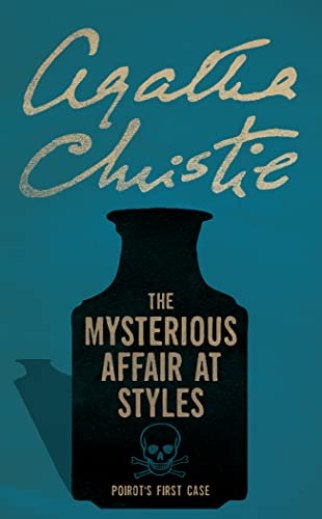
Between 1920 and 1973-ish she wrote 66 detective novels under her (first) married name, Agatha Christie, 6 non-detective novels as Mary Westmacott, and 14 short story collections. In addition a number of her works have been adapted for the stage, or were written as plays that have now been novelised.

But far from setting out to be a great author, she only started writing at all due to a bet with her sister, and a certain amount of boredom. Yet she has created some of the best and worst (sorry, but Parker Pyne and Mr Quin????) detectives in the genre, and some of the most devious and controversial plots to ever trick, misdirect and enthrall the reading public. If we sometimes today find her plots predictable or jaded, that is because we can easily forget that she and a handful of other trailblazers have, through their work, made us as readers more sophisticated and at the same time, have aroused expectations to fit the genre. If we can place the books in their original era, then they become even more fresh, more unusual and very, very clever.

So if you’ve been living on the moon, and haven’t read anything by Christie before, or if you’ve only lately come to detective fiction via some other nefarious genre, what are the five books you should read by Agatha Christie?

Well obviously you’ve got to read the first Poirot book, not that sequence is an issue with Christie as it is with many authors. But it’s always interesting to a) read an author’s first book, and b) read the first book to feature a well-known detective. So you absolutely must begin with The Mysterious Affair At Styles, published in 1920 and featuring Hercule Poirot. I would say he is the world’s foremost fictional detective (though fans of Sherlock Holmes would no doubt disagree). This is a phenomenal debut, and an intriguing mystery.

Christie famously disliked Poirot, and her dislike is clear in the rather comical, uncharitable description of him as he makes his first appearance in chapter two, meeting by accident the narrator of the story, his famous side-kick Hastings. Right from the outset, we note that Hastings always treats Poirot with a mixture of pity and affection. We are told: Poirot was an extraordinary-looking little man. He was hardly more than five feet four inches, but carried himself with great dignity. His head was exactly the shape of an egg, and he always perched it a little on one side. His moustache was very stiff and military. We are also told of his love of neatness bordering on obsession and, again as always, Hastings is at pains to point out that Poirot’s glories are behind him and he is past his prime. In fact, he’s past his prime for the next, what, thirty, forty years?

So Poirot is not in any shape or form the figure of a hero – he’s short, stout, he limps, he’s fussy and overly particular, and he’s older in years than a classic swash-buckling, overcoming-all-obstacles big-screen hero of that era or even our own. And he has personality flaws in the form of vanity and self-importance, and often, a deep lack of self-belief that I think most of us could identify with today.

But his strengths – oh they are good – he is an acute observer of humanity, he notices EVERYTHING, he understands human psychology, and his success lies in his deep thought processes and his use of logic to work out the details of a crime, that and a reliance on the everyday bigotry that overlooks the intelligence or usefulness of a foreigner on the part of many he comes into contact with.

So that’s Styles.

You also HAVE to read two other classic Poirot’s: Death on the Nile and Murder on the Orient Express. These have become such genre classics almost independent of their creator, and the TV series and various film versions have definitely assisted with that. These books have masterful plots featuring an ensemble cast, and represent neat variations on the country house theme by being a ship and a train. The exotic locations just add to the pleasure.

Miss Marple is one of Christie’s other detectives, and is almost as well known and beloved as Poirot. She is a single old lady who knits and gossips. She solves mysteries by the simple expedient of listening, asking questions and again, like Poirot, knowing a great deal about human behaviour. This is largely the result of her life experience, and the fact that she lives in a small community where everyone knows everyone. Like Poirot, she is often overlooked as a threat to the plans of baddies and evildoers. The best Marple book to start with, in my opinion, is again the book that introduces us to the character, a volume of short stories first published in 1933, The Thirteen Problems (or in the US this is called The Tuesday Club Murders). In this book, each of a group of friends tells of an unsolved murder they know about, and various solutions are put forward by the rest of the group, until in the end, Miss Marple, between counting stitches or casting on a new ball of wool, puts forward the truth, which is then acted upon and checked by someone who is a high-up legal chap. By the end of the book, the others now turn immediately to Miss Marple, knowing she will tell them the only true solution.

Two more famous Marple books, which are in a way companion pieces, are A Caribbean Mystery and Nemesis and are also excellent, showing her personality in her strength of purpose and determination to see justice done.

Okay, I know I said five books, and there they are (not really five but it’s not easy to choose between some of them…). And I can’t resist adding a bonus one: the extraordinary Death Comes As The End. It was published in 1945, and is a traditional-style murder mystery, but it is set in ancient Egypt, and the background was gleaned by Christie from her archaeological exploits with husband number two, Sir Max Mallowan. It’s a great story, full of fascinating detail, and it inspired me as a teenager to learn more about history of all eras.

And of course, you’ve got to read The Murder at the Vicarage, Lord Edgware Dies, my personal favourite, The Murder of Roger Ackroyd, and my ‘other’ personal favourite, Evil Under the Sun.

I hope that, having read all the above books, you might feel an impulse to go back and read the rest of her works. They are well worth the effort, and I am sure you will agree, not only are they entertaining and enjoyable, you will also feel that you have come to know the woman behind not just these works but the modern cosy mystery genre as a whole. Without Agatha Christie, I believe there would be no Midsomer Murders, no Vera, Shetland, no Line of Duty,  or Inspector Morse.

***

And now it’s over to you…

As you know, I write genre fiction – that is to say it fits neatlyish into a specific genre type of book – I write mysteries. My books are not, by any stretch of the imagination, literary, nor are they ‘general’ what ever that is. Some writers are quite apologetic and embarrassed that they don’t write something high-brow. Not me. I believe that genre fiction has huge benefits and there’s no need to feel that I ‘only’ write mysteries: ‘Oh it’s only a mystery’ or ‘I really only like romances, I’m afraid.’

You see, I believe that books are lifesavers. Books are companionship for the lonely, entertainment for those who are bored. It doesn’t matter if you can’t hear, or if you can’t walk, if you’re old or young, you can enjoy a book. And if you can’t see, you can listen to audiobooks. Books can be a comfort and a much-needed means of escape from what is sometimes an anxious, or difficult world. We all need a break – and a book is perfect for that.

I had cancer a few years back, and whilst I had tests, surgery, appointments, sat in busy, soulless waiting rooms, and anxiously waited for a prognosis, I read books. It was a relief to get out of myself and my thoughts and into a world where the only bad things that happened would be solved by a detective and the villain locked up. Bliss! A few hours free of my own troubles was just what the doctor ordered. I realised as never before just how wonderful it was to get lost in a good book. I was so grateful to the authors who offered me that respite.

I was lucky, and I am now free of cancer and healthy, but my love and respect for books and their authors will never die.

So a little while ago, I asked my mailing list subscribers some questions about what they love. Here are a few of the most popular responses I had:

Q1. I asked, What is the best thing about finding a new book you love?

You said:

  • Finding a new book can be tough, and it’s important to find relatable characters, an engrossing plot and a style that appeals.
  • Many people said they were drawn by the cover – which is exactly what they are designed to do – to lure you in!
  • For some, finding a new book or series is like meeting a new friend.
  • When readers find a new book or series, they love to tell their friends and family about it!
  • Readers like the idea that the book will be theirs to read again and again, and to refer to, a book that adds to their knowledge or understanding (mainly reference books)
  • People love the sense of starting out on a journey, of ‘meeting’ new people and having adventures along the way. A kind of vicarious holiday.

Q2. Do you always read the same genre, or do you like a lot of different types of book?

You were largely split over this, with many people saying they read anything and everything, and others stating that they only ever read the same kind of books. I’m largely that way myself. I do enjoy the odd history book and classics, and poetry, but almost always I turn to crime, figuratively, of course!

Q3. When do you read?

Again, responses were quite split between those who read during the day, usually with lunch or a coffee or cup of tea, and those who read almost entirely at night before going to sleep. Some people read during commuter journeys on trains and buses. Now that I’m at home during the day, I tend to read with coffee or lunch. When I was working in the big wide world, I used to read on the bus or when I had a lunch break. It’s so nice not to have to sit on a bus for hours on end anymore.

Q4. Actual book or eReader?

The odds were almost overwhelmingly stacked in favour of ‘actual’ paper, hold-in-your-hand-and-sniff-the-pages books. Most people who read on eReaders said they did so mainly for the convenience. I must admit I’m the same. My trusty eReader goes with me when I travel or am away from home, but when I’m at home and reading in comfort, it’s always a ‘real’ book. The great thing about eReaders of course, is your nearest and dearest have no idea just how many eBooks you’ve bought – that little secret is between you and your gadget. One person pointed out that the advantage of reading at night on an eReader is that you don’t need to have a light on in the room, so you don’t disturb your partner. A great point!

Q5. What are your other favourite past-times?

Wow we have a lot of pastimes! Here are just a few:

Writing! Reading, obviously. Walking the dog, taking pics of your cats, gardening, flower-arranging, cooking, various arts and crafts including model-making, embroidery, card-making, painting in oils, painting in acrylics, crochet, knitting, drawing, sewing, photography. Then we had the DIYers, the mad exercise buffs, the tennis-players, the golfers, the swimmers, the dancers, the joggers, the cyclists. You like playing board games and card games, going to the pub, spending time with family and friends, eating out, sport, sport and more sport. You love travel. You love learning new things at evening classes. Some of you like to help others in the community, or volunteer in charity shops or care homes. You play musical instruments, you babysit your grandkids, and all kinds of other amazing stuff. You guys are seriously impressive! No wonder you sometimes need to sit down with a book and just chill.

And lastly…

Q6. What are your favourite TV shows, if you watch TV?

Again, a huge range of results here: people gave general responses such as drama, crime, reality shows, documentaries, comedy etc. but we also got some very specific shows mentioned: Peaky Blinders, Line of Duty, Gogglebox, Brooklyn 99, Poirot, Family Guy, Outlander, Once Upon A Time, Bridgerton (I know why you like that!), The Bay, QI, Mock The Week (RIP – and yes I did sign the petition…), Would I Lie To You, I’m A Celebrity Get Me Out Of Here, The Great British Bake Off, Strictly Come Dancing, Made In Chelsea, Any Star Trek, Star Wars, or Marvel thing, Famalam (not for those who don’t like very, VERY naughty words… but truly hilarious), Unforgotten, any football, all cricket and rugby, True Crime documentaries, and so many more…

I hope you find this as fascinating as I did. Some of the responses were so similar to my own, I feel we could easily be best buds.

***

And I think we all know why Jane Austen adaptations are so popular these days…

Reading a mystery

As you know, I mainly write cozy mysteries, some set in the 1930s or 1960s, some in the ‘now’, and one even set in both the present and the past. Cozy mysteries or cozy crime is the genre where I feel most at home, and those are the kind of books I love to read. I have been reading this genre since I was about 9 or 10 years old, when I began first with the Famous Five, then the Secret Seven, then on to Patricia Wentworth and Agatha Christie. I have always loved the idea of detecting along with the ‘official’ sleuth, trying to get to the clues and figure out ‘whodunit’ before the book’s detective.

If you ever get stuck for books to read, maybe cast your eye over this list and see if there are any names that are new to you. These are the mystery authors whose books I enjoy the most, some are old and some are modern. When you find an author you really like, do you read their books over and over again, or do you remember the too well to do that?

I love to revisit old favourites, but I have a pretty good memory for characters and plots, so I often remember a book too well to enjoy it unless a lot of years have gone by. There are some books where I just reread the beginning – I love a good beginning that sets up the story perfectly and for the reader, there is that delicious sense of anticipation. But I do reread books that I know really well, sometimes I enjoy watching something unfold on the page even though I know exactly what to expect and when.

So then, my favourite mystery authors, here we go, and in no particular order:

Agatha Christie: obvs you’ve all read her books! But have you tried Death Comes As The End – set in ancient Egypt, it’s an interesting variation on the classic murder mystery genre. My personal favourites are Evil Under the Sun, Death Comes As the End, and Death on The Nile.

Patricia Wentworth: if you like ‘em traditional with plenty of romance, these are for you! Often overlooked these days though her books have been enjoying a new lease of life through reprinting. My favourites are: The Girl In The Cellar, The Listening Eye and The Chinese Shawl.

Mary Stewart: not a cozy as such, her books fall into the category of romantic suspense along with authors like Phyllis Whitney. Of Mary’s books, I really enjoy: The Gabriel Hounds, Madam, Will You Talk? and Nine Coaches Waiting. She does that thing where she uses a quote from scripture or Shakespeare as a chapter subtitle. I love that!

Phyllis Whitney: this lady wrote zillions of books before she passed away just a few years ago. My favourites are The Red Carnelian, Columbella and The Turquoise Mask.

Another romantic suspense author is M M Kaye. Look for her ‘Death in…’ short series of 6 books. For me, the best ones are Death in Zanzibar, Death in the Andamans, and Death in Berlin. Try them and let me know if you have a different favourite!

Coming back to modern cozies, how about trying Helena Dixon? I am a big fan of her Miss Underhay series, which like my own books, are set in Britain in the 1930s. Book 1 is called Murder at The Dolphin Hotel, and although you can read them in any order, reading from the beginning will enhance your pleasure as there are continuing storylines that carry on from one book to the next.

Don’t forget to give Sara Rosett a go – she has a couple of series of mysteries, and of course you mustn’t forget Frances Brody, Vaseem Khan and Julia Chapman. Or Julie Wassmer’s Whitstable Pearl series, now wonderfully adapted for TV and starring Kerry Godliman as Pearl.

Or you might try something a little less cozy – perhaps try Ann Cleeves, Abir Mukherjee, Robert Galbraith or Val McDermid to name some of my personal favourite authors.

Let me know how you get on! Who are your favourite mystery authors? Happy reading!

***


Extras… the minor characters every mystery story needs

Extras complaining to the author about not having a name – again.

Last week was all about the main characters – the detective, the villain, the side-kick and of course the victim(s).

This week, I’m interested in thinking about the minor characters – or extras – in my head I see these as a kind of walk-on part, much like those in any TV show or movie. They don’t always have lines. Sometimes they don’t even have names. They might be described as ‘an elderly dog-walker’ or ‘the woman behind the shop counter’. They crop up everywhere the story goes – in shops, houses, on village greens, in museums, and at dinner parties.

But why are they there?

Extras fulfill a number of criteria and needs for the author and the reader.

  • they can deflect attention away from the culprit or villain.
  • they can provide the reader with useful clues or snippets of information.
  • equally, they can provide us with (less useful, sometimes) red herrings and wrong-turns.
  • they enrich the story so it doesn’t consist of just your four main characters, unless that’s the whole point of the story.
  • they can give us a sneak-peek of something that might happen in a later book if this is a series.
  • they act as a kind of commentator or dramatic chorus to comment on the action or criticise or laud the ‘hero’.

But life as an Extra can be tough and is often unpredictable.

Police or other people in authority (completely unaware all too often that they themselves are Extras, can bully them or wrongfully arrest an Extra and accuse them of terrible things they haven’t done.

You need a huge range of skills as you may be called upon to perform almost any task from forensic assistant to chambermaid.

As an Extra, you might be completely overlooked by the reader who doesn’t even notice you, let alone what a magnificent job you do pretending to be an elderly dog-walker when you’re really a young woman in her twenties on her way to college and you don’t even like dogs.

Alice was at the party with two friends. Who were they? No one knows.

And they never remember your name, which is why you have to have a description attached: Miss Jones, the games mistress at school where victim used to teach. You might even find yourself very near the bottom of a long list of characters, a list designed to help readers remember all the people in the book they’ve met but don’t remember.

No one asks your opinion. ‘Tell us, Poirot,’ they cry, at the end of the book. ‘Who did this dastardly deed? and why?’ I mean, all the Extras probably know this information too, don’t they. But no one ever asks them. They just come in with the tea tray and leave without anyone noticing.

Likewise, no one ever asks an Extra if they’re okay and how they feel about being shut up in a big country house with loads of stairs, and a murderer roaming about bumping people off willy-nilly.

And as if all this is not enough, when the author gets bored, you might even end up as the next victim, just to ‘spice things up a bit’.

How is that fair? It’s not just a policeman’s life that’s terrible hard. Try being an Extra for one book, let alone a whole series. I’m only surprised they don’t have a union.

‘I hate being in crowd scenes,’ said the person in the red outfit. ‘So do I!’ said another person in yellow. ‘It’s so anonymous.’

***

The Big Four: the four main characters in a murder mystery

I love murder mysteries. I doubt this comes as any kind of a surprise to most people reading this blog. Characters in a murder mystery fall into one of two categories: they are either part of the Big Four, or they are Extras. This week I want to quickly chat about the Big Four.

Who are the Big Four?

The Big Four are the main characters without whom we would have no murder mystery. They are: The Victim(s), The Villain(s), The Side-kick(s) and The Detective(s).

And yes, they often come as a pair or even more, not just as a lone individual. Detectives, for example, often come as a pair – one an amateur and one a professional. Villains too, can sometimes deliberately confuse the reader by sharing the limelight with another villain, and share the crimes too.

And who doesn’t love a high body-count? Why stop at one Dastardly Deed when you can have two, or three, or…

Let me introduce you…

The Victim(s)

Victims, as avid mystery lovers know, are always bumped off for a reason. And obviously it is The Detective(s)’s(s’)(??) job to discover why and bring the perpetrator to justice.

The richer, the more arrogant, cruel, cold, grasping, greedy and crafty our victim is/was, the better we like it, don’t we? We can then take a vicarious pleasure in their demise as we would never, ever do such a thing ourselves in real life. And the worse they are, the nastier and more creative their all-too-timely death should be. BUT.

They can’t be so bad that we don’t care if their killer evades detection.

In my view, ideally there should be two or three of these demises per mystery because, if I’m honest, I’m always a bit disappointed if there’s ‘only’ one.

The Victim is there for one reason only–to make us, the reader feel clever:  to provide something for The Detective to detect, of course.

The Villain

Whenever I hear the word ‘villain’ I always think of a man in a swirling black cape and top hat, twirling his moustaches menacingly (or smugly, either will do)and saying ‘Mwah haha’.

Sadly, the days of Dick Dastardly have gone, (drat, drat and double drat) and nowadays The Villain can look like anyone:

A little old lady.

A priest.

A stalwart Major-type.

A handsome young man on his honeymoon. (I’m looking at you, Death on the Nile.)

A nurse. (Sad Cypress)

Even a child. (Crooked House)

The Villain is often charming, often invokes our sympathy due to baggage and issues, and can even make us think, ‘Aww well, she/he’s had a tough childhood, maybe we should kindly overlook those four grisly murders and let her/him have a new chance at life.’

We must be on our guard at all times throughout the book until the moment this villain is unmasked.

The Side-kick

The Sidekick has a demanding role. They are there as a kind of placeholder/proxy for the reader.

They must be clingy to the point of irritating, sticking by The Detective’s side when they really should go away and leave him/her alone to think things through. But no, they stick around at all times, asking stupid, inane and tedious questions, so that we don’t have to. We sit at home in our comfiest armchair and loudly exclaim, ‘Rookie mistake, I already knew that…’ but really we’re thinking, ‘Ooh I wasn’t sure, but now that you mention it…’

The side-kick – desperately needed to help us survive the journey

So they are there to help The Detective and the reader to find the evidence and the clues and to arrive at the truth of the mystery.

In fact they don’t create a dialogue, but they are the dialogue – through The Side-kick, the reader can talk to The Detective and The Detective can talk to us.

And finally:

The Detective*

The Detective can be anyone.

Rather like The Villain, The Detective can be a law-and-order professional, or someone from an associated profession (forensics, psychology…), or an amateur with a gift, a nurse, a priest (The Complete Father Brown stories) a stalwart major-type, a nurse, a handsome young man on his honeymoon or even a child (The Sweetness At The Bottom Of The Pie).

The Detective has one job and one job only: to find out whodunit and bring them to justice.

It’s essential that her or his main characteristics include:

Passionate desire for justice, even at risk to self, it goes without saying, I hope.

Incredibly close attention to detail: ‘Sacre bleu, this dust is 3.14159 milimetres in ze thickness, therefore the killer was the maid and the crime was committed on Tuesday afternoon.’* The whole case may depend on just this kind of minuteness.

‘Mesdames et messieurs, allow me to reveal at last, the identity of the criminal’.

Very keen observation skills: ‘Zut alors, the footprints in the mud are of a depth of 3.14159 milimetres, therefore we must find a person of 6 feet 1 inch who weighs 189lbs.’

From the two above attributes, we can also see that they must be good at mathematics too. 

Lastly, the Detective must have a huge ego: We readers love to have all the suspects in a room at the end of the story, and to be taken step by step through the crime to learn the identity of The Villain, and to have the satisfaction of them being led away in handcuffs. Therefore it is essential that our Detective loves to show off just a little and to deliver a lecture on how clever he/she is and how many different things we missed.

So next time you are reading a mystery, keep a handy notebook and pen by your side, so you can check for all these points!

*must supply own white hat

*sorry btw, for me all fictional detectives are Hercule Poirot, even when they’re not

***

Come back with me: It’s 1935 #timetravel #daydreaming

Coming soon to a posh drawing room near you…

Let’s play a game of ‘what shall we do this weekend’.

I’ve been thinking about how amazing it would to travel back in time to the actual 1930s* instead of just daydreaming/writing or pretending/obsessing about it…

This is what I’ve come up with:

Things I’d be excited to do/try:

A posh weekend at a country house with lots of people who are glamorous and speak nicely.

Ditto the big frocks and hair-dos.

And gloves and hats.

And the four/five/six course dinners.

Bridge evenings.

Going to the house of someone posh for ‘drinks’.

Dancing to the radio in a kind of impromptu disco at home with dinner guests.

The excitement of talkies – films with speaking actors!

Meet Gary Cooper when he was young and gorgeous…

And knowing there is a study or library, and perhaps even secret passages.

And bell-pulls to summon people from the depths of the house. I’d be like a child, ringing the bell then have to run away as there would be no legitimate reason to ring for them…

Maybe a maze? Or a rose garden? Or both? What about a croquet lawn? I am certain I’d be an amazing talent when it came to croquet. I can always bowl a great croque.

It might be nice to – very occasionally – have all the men stand up out of politeness when I come into the room. Or stop using bad words because I am in the vicinity and am a ‘lady’ (until they get to know me better, of course).

Travelling by steam train in the actual era they were used, not just on a preserved line in my usual jeans/t-shirt combo.

Things I’d miss terribly:

Being able to say all those bad words that are so good for stress relief when things go wrong. In the 1930s, I’d probably be vilified for my potty-mouth. Though to be fair, most of my rage is triggered by modern technology so it wouldn’t be an issue in the 1930s, when a telegram was still pretty exciting, and indoor plumbing was all too often a thing reserved for the gentry.

Sorry if I’ve destroyed your illusions about the way a writer speaks/acts/looks, btw.

My freezer, and my microwave.

Going to a cafe ALL the time to sit and watch the world go by whilst pretending to write.

The Internet (sorry to all you nay-sayers).

Nipping to a supermarket – even on a SUNDAY to get the bits and pieces I completely forgot I urgently needed.

Books by all my favourite post-1930s authors such as Ann Cleeves, Helena Dixon, Julie Wassmer, Helen Forbes, Emma Baird…

TV: Midsomer Murders/Death in Paradise/Vera/Madame Blanc/Strike/Van der Valk/Darby and Joan/Three Pines/The Chelsea Detective/Dalgliesh/Whitstable Pearl… (can you spot a trend here?) 

All my modern vaccinations – I don’t want to catch diptheria/small pox/scarlet fever etc

Being able to slob about in jeggings and a baggy jumper – because I reckon there could be times when looking posh 1930s-style might just be too much effort…

Being allowed an opinion about anything other than babies, flower arranging or hair-dos.

So what do you think? What would you be desperate to see/try/person to meet? Or what would you miss the most? Or what about another era? What would be your perfect era to visit if that were possible?

*obviously I’m dragging my poor family along with me – I wouldn’t dream of going anywhere exciting without them.

***