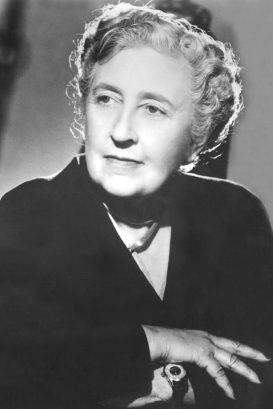
So what has Agatha Christie done for us?

Agatha Christie is arguably one of the most well-loved authors of all time. And her books are still being published in new formats, turned into plays and TV series and mini-series, and of course films on the big screen, a hundred years after she first began her writing career. Her books regularly top the online bestseller lists and there have been spin-offs, recreations and fan fiction. You can even buy her ‘secret notebooks’, biographies and merchandise.

Between 1920 and 1973-ish she wrote 66 detective novels under her (first) married name, Agatha Christie, 6 non-detective novels as Mary Westmacott, and 14 short story collections. In addition a number of her works have been adapted for the stage, or were written as plays that have now been novelised.

But far from setting out to be a great author, she only started writing at all due to a bet with her sister, and a certain amount of boredom. Yet she has created some of the best and worst (sorry, but Parker Pyne and Mr Quin????) detectives in the genre, and some of the most devious and controversial plots to ever trick, misdirect and enthrall the reading public. If we sometimes today find her plots predictable or jaded, that is because we can easily forget that she and a handful of other trailblazers have, through their work, made us as readers more sophisticated and at the same time, have aroused expectations to fit the genre. If we can place the books in their original era, then they become even more fresh, more unusual and very, very clever.

So if you’ve been living on the moon, and haven’t read anything by Christie before, or if you’ve only lately come to detective fiction via some other nefarious genre, what are the five books you should read by Agatha Christie?
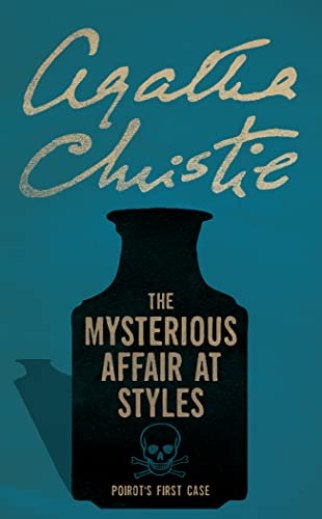
Well obviously you’ve got to read the first Poirot book, not that sequence is an issue with Christie as it is with many authors. But it’s always interesting to a) read an author’s first book, and b) read the first book to feature a well-known detective. So you absolutely must begin with The Mysterious Affair At Styles, published in 1920 and featuring Hercule Poirot. I would say he is the world’s foremost fictional detective (though fans of Sherlock Holmes would no doubt disagree). This is a phenomenal debut, and an intriguing mystery.

Christie famously disliked Poirot, and her dislike is clear in the rather comical, uncharitable description of him as he makes his first appearance in chapter two, meeting by accident the narrator of the story, his famous side-kick Hastings. Right from the outset, we note that Hastings always treats Poirot with a mixture of pity and affection. We are told: Poirot was an extraordinary-looking little man. He was hardly more than five feet four inches, but carried himself with great dignity. His head was exactly the shape of an egg, and he always perched it a little on one side. His moustache was very stiff and military. We are also told of his love of neatness bordering on obsession and, again as always, Hastings is at pains to point out that Poirot’s glories are behind him and he is past his prime. In fact, he’s past his prime for the next, what, thirty, forty years?

So Poirot is not in any shape or form the figure of a hero – he’s short, stout, he limps, he’s fussy and overly particular, and he’s older in years than a classic swash-buckling, overcoming-all-obstacles big-screen hero of that era or even our own. And he has personality flaws in the form of vanity and self-importance, and often, a deep lack of self-belief that I think most of us could identify with today.

But his strengths – oh they are good – he is an acute observer of humanity, he notices EVERYTHING, he understands human psychology, and his success lies in his deep thought processes and his use of logic to work out the details of a crime, that and a reliance on the everyday bigotry that overlooks the intelligence or usefulness of a foreigner on the part of many he comes into contact with.

So that’s Styles.

You also HAVE to read two other classic Poirot’s: Death on the Nile and Murder on the Orient Express. These have become such genre classics almost independent of their creator, and the TV series and various film versions have definitely assisted with that. These books have masterful plots featuring an ensemble cast, and represent neat variations on the country house theme by being a ship and a train. The exotic locations just add to the pleasure.

Miss Marple is one of Christie’s other detectives, and is almost as well known and beloved as Poirot. She is a single old lady who knits and gossips. She solves mysteries by the simple expedient of listening, asking questions and again, like Poirot, knowing a great deal about human behaviour. This is largely the result of her life experience, and the fact that she lives in a small community where everyone knows everyone. Like Poirot, she is often overlooked as a threat to the plans of baddies and evildoers. The best Marple book to start with, in my opinion, is again the book that introduces us to the character, a volume of short stories first published in 1933, The Thirteen Problems (or in the US this is called The Tuesday Club Murders). In this book, each of a group of friends tells of an unsolved murder they know about, and various solutions are put forward by the rest of the group, until in the end, Miss Marple, between counting stitches or casting on a new ball of wool, puts forward the truth, which is then acted upon and checked by someone who is a high-up legal chap. By the end of the book, the others now turn immediately to Miss Marple, knowing she will tell them the only true solution.

Two more famous Marple books, which are in a way companion pieces, are A Caribbean Mystery and Nemesis and are also excellent, showing her personality in her strength of purpose and determination to see justice done.

Okay, I know I said five books, and there they are (not really five but it’s not easy to choose between some of them…). And I can’t resist adding a bonus one: the extraordinary Death Comes As The End. It was published in 1945, and is a traditional-style murder mystery, but it is set in ancient Egypt, and the background was gleaned by Christie from her archaeological exploits with husband number two, Sir Max Mallowan. It’s a great story, full of fascinating detail, and it inspired me as a teenager to learn more about history of all eras.

And of course, you’ve got to read The Murder at the Vicarage, Lord Edgware Dies, my personal favourite, The Murder of Roger Ackroyd, and my ‘other’ personal favourite, Evil Under the Sun.

I hope that, having read all the above books, you might feel an impulse to go back and read the rest of her works. They are well worth the effort, and I am sure you will agree, not only are they entertaining and enjoyable, you will also feel that you have come to know the woman behind not just these works but the modern cosy mystery genre as a whole. Without Agatha Christie, I believe there would be no Midsomer Murders, no Vera, Shetland, no Line of Duty,  or Inspector Morse.

***

Telling myself it’s all okay and that I can do this…

I’ve been really stumped for ideas to come up with for a blog post or a newsletter lately. Mainly because I’m using all my creative energy and inspiration for the final edit/polish I’m currently doing on A Wreath of Lilies (out 8th December, lest we forget – all too soon for my comfort right now).

And these are the things I’ve realised about my story so far:

  1. There are too many people with a surname beginning with P
  2. There are too many people with a first name beginning with S
  3. As always with my books there are just – too many people. Soooo many people…
  4. Things happen in the story that have already happened.
  5. Things happen before they happened?????? How does that even????????????????? Yes I don’t know either.
  6. One chap’s wife changed name halfway through the book. My sympathies go out to the family in question.
  7. One dead body was dead so often in so many places, she/he must have been a triplet… Maybe even a quintuplet. (Note to self, a story about quintuplets would be awesome, if rather complicated.)
  8. I’ve got more criminals than crimes.
  9. I’ve got more police officers than criminals.
  10. Did I mention I have too many characters?
  11. My main protagonists have accidentally reversed their ages by a year. I wish I could do that IRL.
  12. I found my characters using jargon and slang that wasn’t around in that era.
  13. The police are using technology that wasn’t around in that era.
  14. If they all stopped drinking tea and gazing at one another, the crime(s) would get solved three days earlier.
  15. Pretty sure it will end up being okay though. Keeping everything crossed.

Quick sneaky peek:

Closer to hand, Dee was startled out of her thoughts by a man suddenly saying, ‘Ah, we meet again!’

Turning, she saw Clive Barton’s smiling face and she responded with a friendly, ‘Mr Barton, how nice to see you again. I’m here with Miss Marriott,’ gesturing as she spoke.

He nodded, looked disappointed, and murmured, ‘Excuse me, ladies.’ He went off and she saw him settle himself in a seat near the back of the room.

‘He’s too old for you,’ Miss Marriott said in a stage-whisper, taking Dee by surprise. Why was everyone so interested in her love-life? Although in Mrs Padham’s case, perhaps she had become so bitterly opposed to anyone having a love-life after she herself had been abandoned. Dee wondered vaguely why Mrs Padham’s husband Henry had left her. Perhaps she had nagged him the way she nagged her guests.

‘My goodness, I should think so,’ she said vehemently to Miss Marriott’s remark. ‘Not that I’m looking anyway.’

‘Taken, are you?’ Miss Marriott’s eyes bore into her, on the alert for any kind of response. Dee thought she may as well admit it.

‘Sort of.’

‘I see.’ Miss Marriott’s smile was triumphant.

It seemed likely, certain even, that there would be further questions later. But now, with the room packed and a number of people standing at the sides and at the back, the woman at the front stood neatly to attention at the table and rapped on the wooden surface with a teaspoon from the cup and saucer in front of her.

‘They get tea, I notice,’ Miss Marriott whispered resentfully. Dee simply nodded.

‘Good evening ladies and gentlemen. Welcome to this open meeting to discuss the proposal to move the graves from the existing burial site to a new position at the north end of the village. I am Cynthia Miles-Hudson, head of planning at Northeast Essex council. On my right, is the Honourable…’

‘There’s nothing honourable about Fast Eddie Windward!’ someone yelled from the back. ‘He’s as crooked as they come!’

A Wreath of Lilies eBook version pre-order


***

Coming 8 December 2023: A Wreath of Lilies: Miss Gascoigne mysteries book 2

I’m giving in to the long-suppressed urge to share a scene from the new murder mystery I’m currently working on. It will be called A Wreath Of Lilies – you may well have seen me banging on about it already. This will be the second book of my new-ish 1960s series featuring Dee Gascoigne as a private detective. If you haven’t already seen it, you can find out more about book 1 – A Meeting With Murder  – here.

Here’s the blurb-type thing (which may change…)

On her first ‘official’ investigator case, Dee Gascoigne is off to the village of Hartwell Priory, where locals are up in arms over the proposal to dig up the deceased ancestors buried in the local cemetery in order to make way for three hundred new houses.

As if things aren’t tense enough, a group of hippie-like ghost hunters arrive and hold a seance. A message from beyond the grave seems to indicate that a grave has been forgotten.

Or was it just an illegal burial?

This book will be out in October, and like all my books, will be available in eBook form, paperback and large print paperback, from Amazon, and regular-print paperback only from ‘other’ online retailers and libraries. Here’s a sneak peek, in case you’re interested, hope you enjoy it.

Dee Gascoigne was the only person in the train carriage. She had a newspaper in case she got bored, as it was a long, slow journey to Hartwell Priory, a village close to the North Essex coast. And if the newspaper was not enough, she had a novel in her handbag – the Agatha Christie book that she had wanted to read for some time and that she’d been given by her cousin Jenny as a birthday present. Next to the brand new copy of A Caribbean Mystery was the envelope Monty had given her. She had better not lose it. It contained some cash to pay for her expenses, and a couple of sheets of paper that outlined her new ‘case’. She used the word in her mind, and it thrilled her to the core – she was actually on a case. In addition to these she had a letter of introduction and a handful of business cards so that she could be confident in the face of any challenge to her – call it what it was – nosy questioning.

If there was something that could be called a ‘gift’ in Dee’s character it was her ability to ask far too many questions, and it was pleasing to know that these could now be asked officially on behalf of Montague Montague of London, legal services.

Only yesterday, Thursday September 2nd 1965, Dee had been sitting in Monty’s office, hoping almost against hope it had seemed, that he could help her.

It had been practically six months since she had left – or been asked to leave – her job as a modern languages teacher at a very nice school for very nice young ladies. Since then she had found herself at a loss over what to do with her life.

Then, in the Spring, she had been sent off to the seaside to convalesce after an illness and had stumbled into a murder mystery exactly like those she so dearly loved to read. (Here she glanced with fond anticipation at the little bit of the cover of A Caribbean Mystery that she could see nestling in the top of her open bag). She had helped her dratted sort-of cousin, Inspector Bill Hardy, to clear up the mystery, risking her own life and limb to do so, but was the man grateful? Not at all. ‘Keep out of police business in future,’ he had growled at her at her mother’s birthday party, grabbing her arm in a vice-like grip and steering her away from the celebrations where she had been enjoying a lively discussion with her aunt, his mother, who also loved to ‘dabble’ in mysteries. He had a bloody cheek, Dee fumed to herself.

Anyway… Where was she? She had lost herself in the midst of feeling angry with Bill. She certainly wasn’t going to think about how handsome he had looked in his formal dinner suit, nor about how much she liked the way his dark hair crinkled behind his ears and at his neck now that he was wearing it a little longer as many young men did these days.

She had been out of work for some months now. Oh, she had been invited to several interviews for positions at other schools, but it always came down to the same thing: she just didn’t want to go back to teaching.

Yet what else could a recently separated woman do? People were so sniffy about the idea of a woman leaving her husband. It was this scandalous action on her part that had cost her the job in the first place.

And then, seemingly from nowhere, when all hope was lost and the money she had borrowed from her parents was dwindling to a pitifully tiny amount, dear, dear Monty had asked her brother Rob to get her to come and see him.

‘I’ve got something in the way of a job idea that might interest you,’ M’dear Monty had wheezed at her across his vast oak desk. Eighty if he was a day, and about to start his fifth retirement, Monty’s legal expertise had saved Dee’s family on more than one occasion.

She had been all ears. Could he really be serious? She held her breath waiting to see what he said. Even if it was a typing job, she’d have to take it. Not that she could type, not really. But she could no longer pretend that she wasn’t desperate. Her pride – that thing that goeth before a fall – was now in tatters.

‘Most law practices engage investigators to find out things for them. To carry out research, or to go to speak to people, that sort of thing. Montague’s is no different. But the fellow I have been using for the last two or three years has – er – shall we say – found it advantageous to his health to quickly move to South America. Therefore I now have a vacancy.

‘Dear Rob has kindly given me full account of your exploits down in Porthlea – delightful place – in the spring, and I think you could be just what I’m looking for. I know your inquiring mind, (nosiness, Dee told herself) and that you are an intelligent woman. Resourceful too, (crafty, Dee amended) and I know that I need have no doubts whatsoever about your moral integrity.’

She was on the point of speaking, but he held up a hand to halt her. He added, ‘Oh I know this is rather new to you, M’dear, but I feel you have a certain bent for investigating. In any case, I need someone right now, and if I may be blunt for a moment, you need the money. Can I persuade you to give it a try? If it doesn’t suit you, M’dear, no harm done on either side. What do you say?’

Well, what could she say?

‘My goodness, Monty dearest, I’d love to!’

And so here she was, on a painfully slow train that seemingly stopped at every rabbit hutch and milepost, heading to a place she’d never even heard of: Hartwell Priory.

She knew it was a tiny place, barely more than a halfway point between the busy port of Harwich and the city of Colchester in the county of Essex. She was to find her way to a guesthouse and rent herself a room for the week. Monty seemed to think it could take her several days, perhaps a whole week, to find out the things he needed to know.

She had money for her expenses, and the promise of ten pounds in wages, whether she was successful or not. Oh, she prayed she would be. The last thing she wanted was to let Monty down after his kindness.

The guard peered at her through the window of the connecting door to the next carriage. He’d already clipped her ticket and was checking to see if any new passengers had boarded into her carriage. They hadn’t of course, it had been almost an hour since she’d seen anyone other than the guard.

The business cards Monty had so clearly had printed before he even knew what she would say, stated simply: Miss Diana Gascoigne, Associate, Montague Montague of London, legal services. And the letter of introduction, was exactly that, short, to the point, impossible to quibble with or gainsay:

‘To whom it may concern,

I confirm that Miss Diana Gascoigne is an associate of this company, Montague Montague of London, legal services, and that she is employed by myself and under my instructions.

The Honourable Montague Montague QC, Bart.,’

The connecting door opened. Dee glanced up. The guard, a young man in his twenties, said,

‘We’ll be there in two minutes, miss. Watch your step getting down, it’s quite a drop to the platform.’

‘Thank you.’

‘Do you need help with your suitcase?’

‘Oh no, that’s quite all right, thanks.’ She beamed at him.

He blushed and left, and Dee closed her handbag with a snap, got up, grabbed her raincoat and hat, and hefted her case down off the luggage net and began to make her way to the corridor. The train slowed and the long narrow platform appeared beneath the window.

She had arrived.

***

So are you hooked? You can pre-order the eBook here, or just leave yourself reminders everywhere to order the paperback, hardback or large print paperback when they come out, around the same time as the eBook – sorry ‘actual’ books are not available yet for pre-order, only the eBook. 

Grateful thanks for the image go to Shutterstock and more especially, Agalaya:

https://www.shutterstock.com/g/Arco+Bianco/about

***